DeepSeek R1 vs. Grok 3: Compare the Workload, Not the Headline
DeepSeek R1 offers teams an open-weight deployment path, while Grok 3 is evaluated through xAI's current product and API access. For a production choice, compare the exact versions on task success, tool behavior, latency, and cost using identical prompts.
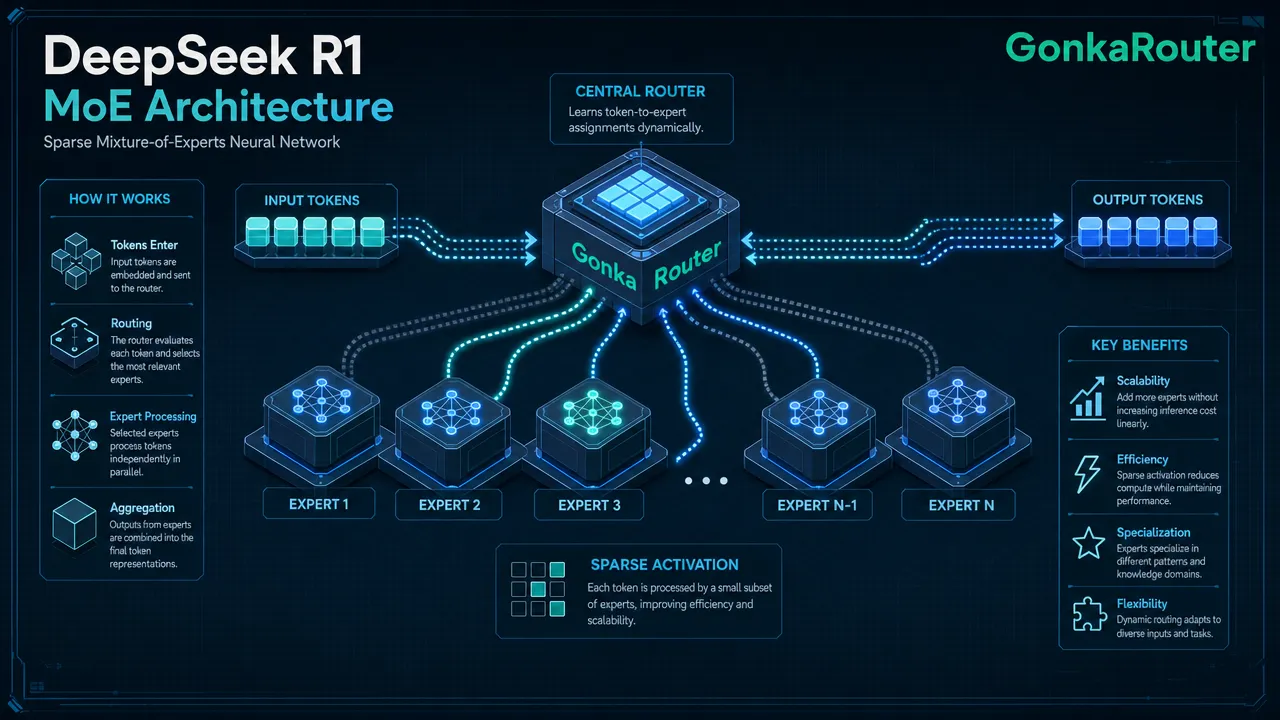
Both vendors change model names and API offerings over time. Check the DeepSeek API documentation and xAI developer documentation for current identifiers, capabilities, and prices before making a production decision. Do not compare benchmark scores unless the task, scoring method, model variant, and inference settings match.
Compare Open-Weight Access and Hosted APIs Separately
DeepSeek R1 is known as an open-weight reasoning release, which gives teams a self-hosting option subject to hardware, serving, licensing, and maintenance requirements. Hosted API access is a separate choice with its own model IDs, rate limits, pricing, and data terms. Grok 3 access is governed by xAI’s current product and API availability. These deployment paths are not equivalent just because both expose a chat interface.
For a fair evaluation, prepare the same prompts and expected outputs, then measure task success, structured-output validity, tool-call correctness, latency, and total cost. Include human review for consequential tasks. Public benchmarks are useful context, not a substitute for testing your workload.
Keep Model Availability Distinct From API Compatibility
GonkaRouter supports OpenAI-compatible and Anthropic-compatible request formats, but it does not currently offer DeepSeek R1 or Grok 3. Its supported models are GLM-5.3-Flash, DeepSeek-V4-Flash-0731, and MiniMax-M2.7. Confirm the live catalog before selecting a route. Compatibility refers to API format; it does not mean the gateway provides official models from OpenAI, Anthropic, DeepSeek, or xAI.
Build a Fair DeepSeek R1 vs. Grok 3 Test
Start by naming the exact products under test. A downloadable DeepSeek R1 checkpoint, a hosted DeepSeek API model, the Grok web product, and an xAI API model are different deployment surfaces. Record the model identifier, snapshot or release, endpoint, region, client version, and test date. Without that information, a result cannot be reproduced when a provider updates an alias or serving configuration.
Use prompts drawn from the application rather than a generic trivia set. Include common cases, difficult edge cases, adversarial inputs, and examples that should be refused or escalated. Freeze generation settings where both APIs support comparable controls. When settings differ, document the difference instead of pretending the runs are identical.
Define an acceptance check for every example. Code should compile and pass tests. Structured extraction should validate against a schema and match expected fields. A support answer should be grounded in the supplied product context. Tool calls should use an allowed tool with valid arguments. Human reviewers should use a short rubric and evaluate blinded outputs where subjective judgment is necessary.
Compare Operations Alongside Quality
Correctness is only one production dimension. Measure time to first token, total latency, throughput under expected concurrency, rate-limit behavior, and error recovery. Test streaming with the actual SDK and parser that production will use. A model that looks fast in a single request may behave differently under load or with a long context.
Calculate cost per accepted task rather than price per token. Include the initial request, reasoning or output tokens as billed, validation repairs, retries, and human correction. If a route frequently returns malformed tool arguments, its effective cost can exceed a more expensive route that succeeds on the first attempt. Use current provider pricing for the account and region under test; do not rely on an old comparison table.
Data handling can decide the result before a benchmark begins. Review retention, training use, regional processing, access controls, deletion, and incident terms for each access path. Self-hosting changes that responsibility rather than removing it: the team must secure weights, inference servers, logs, network access, and updates. Document which option satisfies the workload's policy before sending sensitive data.
Evaluate Reasoning and Agent Workflows Carefully
For reasoning tasks, score the final answer and required evidence, not the length of hidden or visible reasoning. Long explanations can sound convincing while containing an incorrect step. Use problems with verifiable outcomes and track calibration when the model is uncertain. For business decisions, require citations or source-grounded outputs where the workflow supports them.
Agent evaluation must cover state and side effects. Test tool selection, argument validation, permission enforcement, repeated calls, and behavior after a tool error. The application should enforce authorization and idempotency regardless of model. Do not allow either candidate to perform an irreversible action solely because its generated tool call is syntactically valid.
Run multi-turn tests when the product depends on memory or iterative planning. Measure context growth, repeated instructions, and the chance of drifting from the original objective. Add a maximum step count and total budget so a failed plan cannot create an unbounded loop.
Turn the Result Into a Deployment Decision
Summarize results by workload, not with one combined winner. DeepSeek R1 may be preferred for one reasoning-heavy batch, while another model or access path is better for an interactive tool workflow. Preserve the raw test inputs, expected outputs, settings, and measured results so the decision can be revisited.
Deploy the chosen route to a low-risk canary and compare it with the benchmark baseline. Monitor acceptance, latency, errors, and cost. Keep rollback in configuration and re-run the suite when the model or API changes. This approach produces a defensible answer to “which is better” for your system, even when the answer differs across tasks.
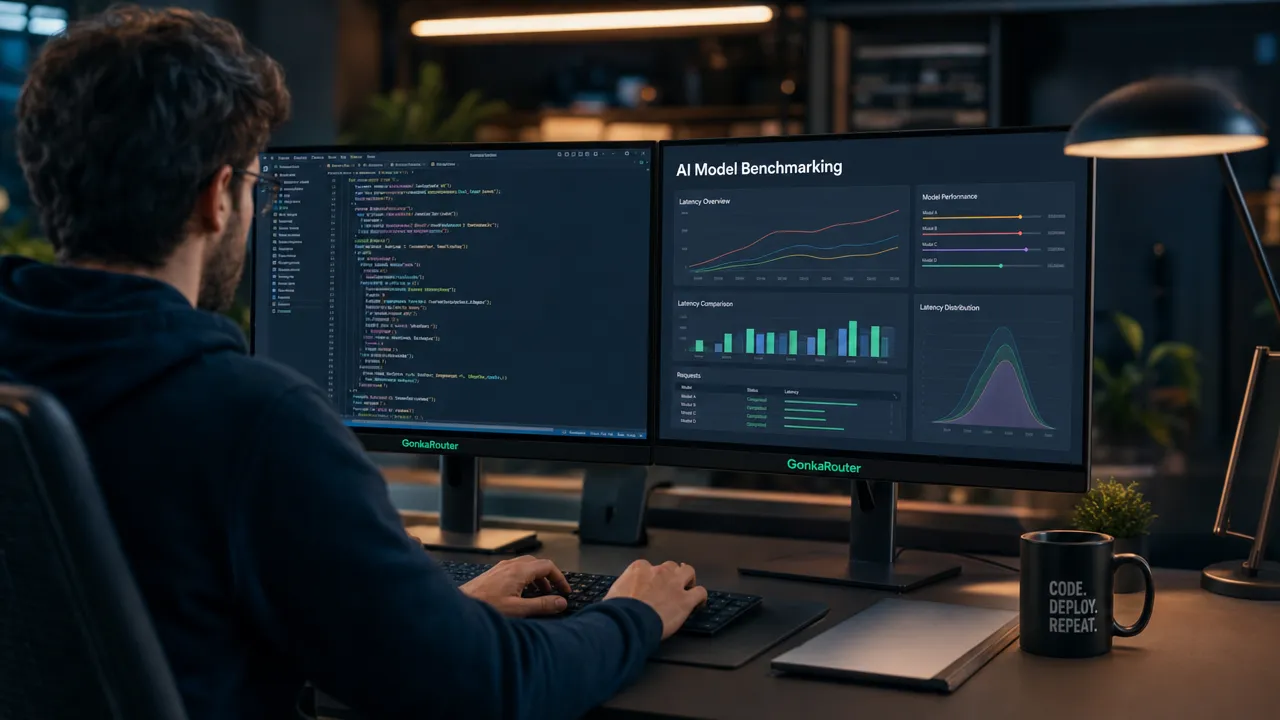
There is no universal winner: compare the exact DeepSeek R1 and Grok 3 variants available to your account on the same prompts, settings, and acceptance checks. Record the endpoint and model ID because hosted aliases and product access can change. GonkaRouter's current catalog lists GLM-5.3-Flash, DeepSeek-V4-Flash-0731, and MiniMax-M2.7, not DeepSeek R1 or Grok 3. Review the live catalog, then benchmark one supported route against your baseline before moving production traffic.