Every few months, a foundational model release resets the baseline for what production AI applications can achieve. Whether it is OpenAI expanding its frontier lineup with the release of GPT-6 Sol and GPT-6 Luna (gpt-6-sol and gpt-6-luna), Anthropic publishing ongoing updates across its Claude model releases, or Google highlighting complex coding and interactive 3D world-building workflows powered by Gemini 4 Argon, major vendor launches create immediate pressure on engineering teams. Product managers want day-zero benchmarks, leadership asks how quickly new reasoning or multimodal capabilities can reach staging, and developers want to test the new APIs against their hardest prompts.
For engineering teams that have standardized production around an LLM gateway or model router, a launch should trigger a controlled evaluation rather than an immediate architecture rewrite.
A candidate model can be benchmarked at its official endpoint while production continues on a stable baseline. Before promotion, verify model identity, token accounting, streaming semantics, reasoning controls, tool schemas, latency, and cost per accepted task. This separates launch-day curiosity from production readiness.
Engineering leaders should choose the evaluation path that matches the urgency and expected product value:
Call the Direct Vendor API: Bypass the unified gateway entirely for the new model and integrate the vendor's native SDK or HTTP endpoint directly into the application layer.
Deploy a Self-Managed Compatibility Proxy: Stand up an internal translation bridge (an OpenAI-compatible or Anthropic-compatible wrapper) in front of the new vendor API so the application codebase continues talking to a uniform interface.
Keep the Current Production Baseline: Continue serving live traffic through the established interface while the candidate runs through isolated evaluation and promotion gates.
Below is an architectural analysis of these three paths, examining how each impacts SDK maintenance, payload fidelity, production reliability, and long-term migration debt.
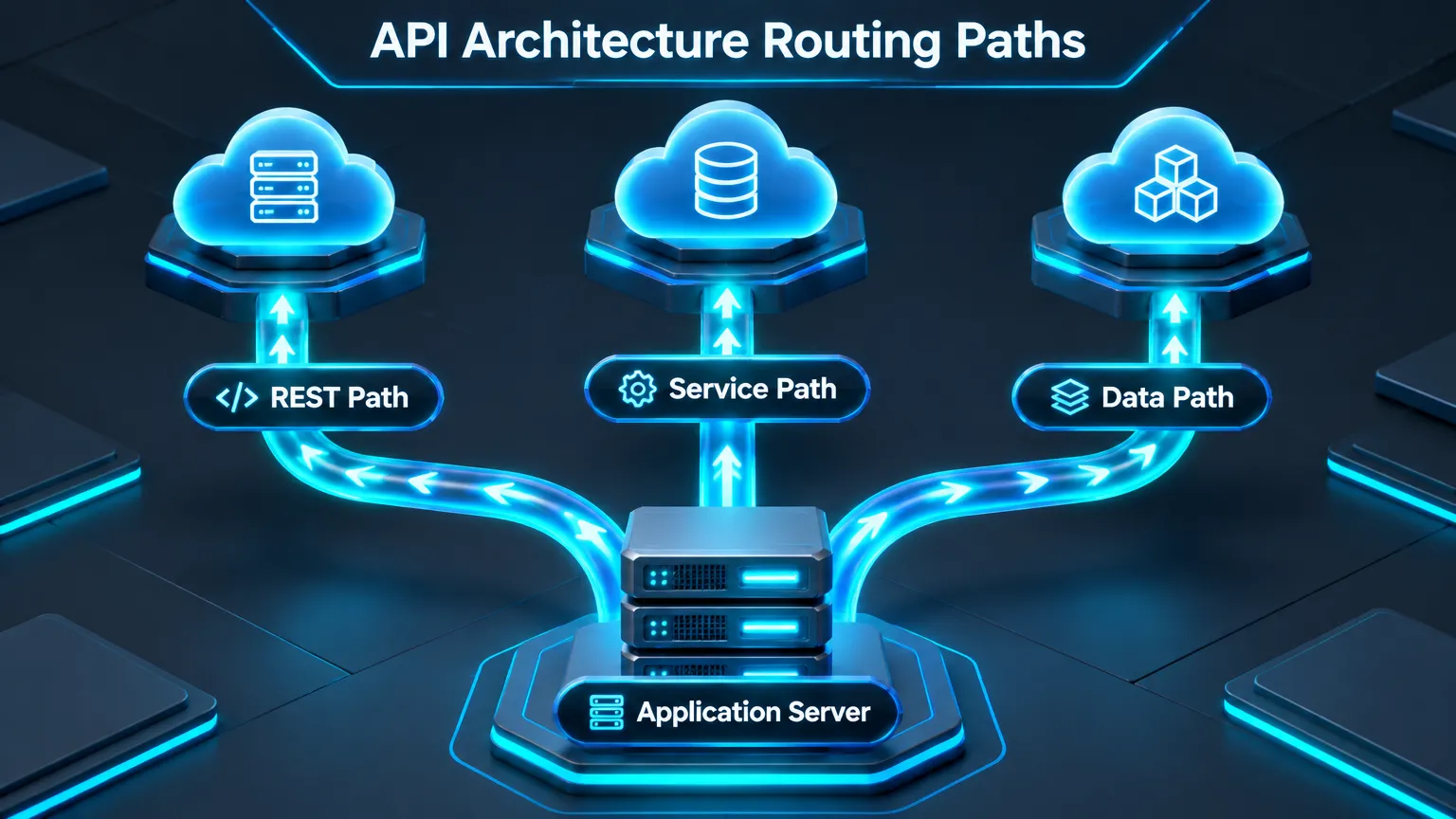
Three Paths: Direct Evaluation, Adapter Layer, or Production Baseline
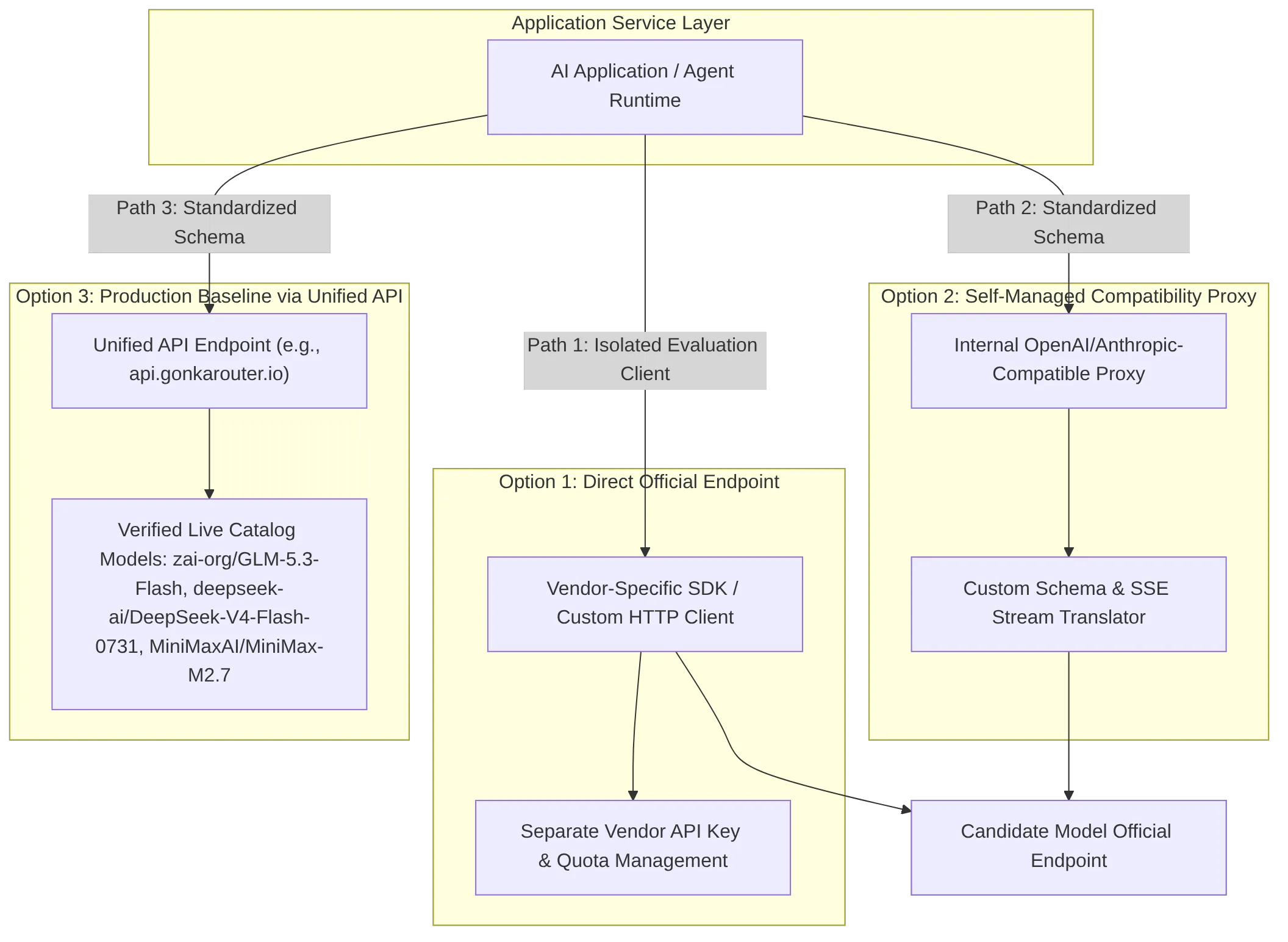
To understand how each option alters request topology and operational responsibility, consider how traffic flows from your application services to upstream model providers.
The following architecture diagram compares direct evaluation at an official endpoint, an internal adapter layer, and a stable production baseline through a unified API.
Option 1: Evaluate Through the Official Endpoint
The fastest way to evaluate a newly announced model is to use the provider's official endpoint inside an isolated test harness. When OpenAI introduces models like GPT-6 Sol and Luna or Google highlights Gemini 4 Argon, the official API is the authoritative place to inspect model-specific request fields and behavior.
Technical Advantages
Zero-Day Feature Fidelity: New flagship models frequently ship with proprietary request fields—such as granular reasoning effort controls, native computer-use tool definitions, server-side context caching headers, or multimodal input blocks—that do not map cleanly onto generic chat completion schemas. Calling the direct API ensures nothing is stripped or silently ignored by an intermediate translation layer.
No Proxy Translation Bugs: You interact directly with the provider's documented error codes, retry-after headers, and native SSE chunk framing without middleman serialization overhead.
Architectural and Operational Costs
Bypassing a unified gateway introduces immediate architectural fragmentation:
Codebase Bifurcation: Instead of a single request client, your service now contains conditional branching (
if provider == "direct_vendor_x"), distinct parameter mappings, and separate response parsers.Authentication and Secret Sprawl: Direct integration can force multiple application services to hold provider API keys in their environment variables. Rotating keys, scoping permissions per service, and auditing token spend then become fragmented across vendor dashboards unless your platform team supplies a centralized control layer.
Uncontrolled Token Loops: Without centralized budget controls, a runaway agent loop using a direct API key can consume a departmental budget before billing alerts fire. Test retry limits and enforce application-side token budgets before production rollout.
Option 2: Deploying a Self-Managed Compatibility Proxy (The Bridge Layer)
When platform engineering teams want day-zero access to an external model without polluting application code with vendor-specific SDKs, they often build or deploy a self-managed compatibility proxy. In this pattern, the application continues sending requests in a standardized format (typically an OpenAI-compatible POST /v1/chat/completions or Anthropic-compatible POST /v1/messages schema) to an internal proxy service, which translates the payload into the target vendor's native API format.
Technical Advantages
Application Code Uniformity: Product engineers do not need to install new SDKs or rewrite agent execution loops. Switching to the new model is reduced to changing the
modelstring and routing that model ID through the internal proxy.Centralized Secret Isolation: Raw vendor credentials remain confined to the proxy infrastructure rather than proliferating across downstream application containers.
Architectural and Operational Costs
While standing up a lightweight proxy sounds trivial during a whiteboard session, maintaining production-grade schema translation for a bleeding-edge model carries steep hidden engineering costs:
Schema Translation Impedances: Mapping basic
system,user, andassistanttext messages is straightforward. However, translating parallel tool calls, forced tool-choice constraints, multimodal content arrays, and structured JSON schema outputs across incompatible APIs requires continuous adapter maintenance. If your proxy silently drops an unsupported parameter, the model's behavior degrades subtly; if it throws an error, client portability breaks.SSE Streaming Edge Cases: Non-streaming requests often pass integration tests while streaming requests fail in production. Different vendors frame SSE streams differently—some emit incremental text deltas, others emit separate lifecycle events for reasoning blocks, tool call argument fragments, and final token usage metadata. Normalizing partial UTF-8 byte sequences, mid-stream HTTP errors, and
[DONE]sentinels requires rigorous conformance testing.Reasoning Token Accounting Mismatches: Modern reasoning models consume internal reasoning tokens before emitting visible output tokens. If a self-managed proxy naively maps a client's
max_tokensparameter to a vendor's total output budget without accounting for hidden reasoning overhead, responses can suffer from reasoning-token starvation—truncating the completion before the visible answer is even generated.
Option 3: Keep the Current Production Baseline
The third path is to keep the current production baseline unchanged while the new candidate is evaluated offline. This avoids coupling a release-day experiment to live application traffic and gives the team time to collect representative quality, latency, reliability, and cost evidence.
A controlled baseline also reveals whether the launch addresses the application's actual bottleneck. Many production issues come from retrieval quality, prompt design, schema validation, or retry behavior rather than the model tier alone.
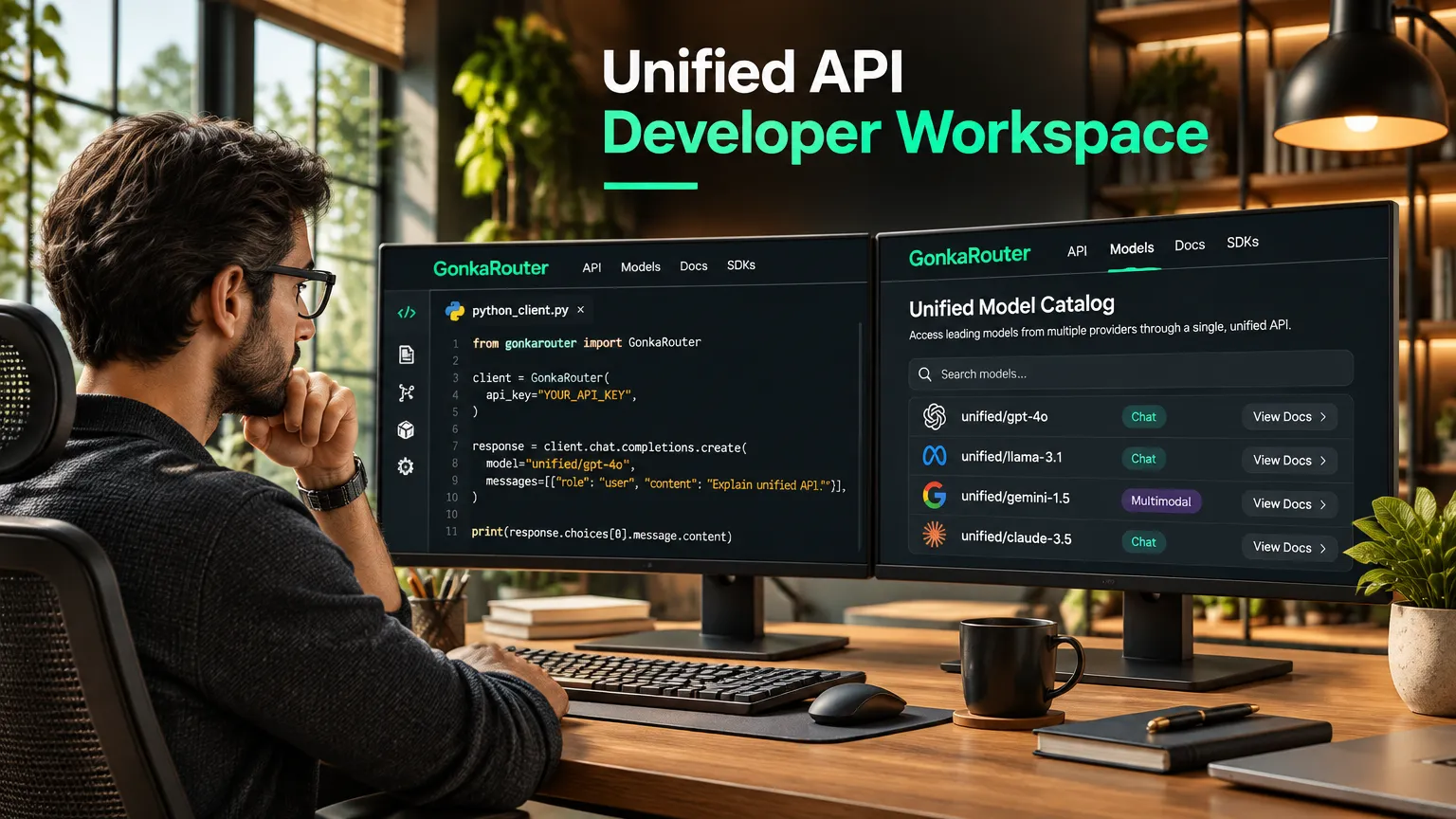
Maintain Delivery While the Evaluation Runs
Teams using a unified router such as GonkaRouter can keep production work moving on a consistent interface while candidate evaluations run separately.
Use the official GonkaRouter model catalog to choose current production baselines and record each selected model ID and documented capability flags in the evaluation manifest.
Architecture Note: Keep vendor-specific model names and request fields inside adapters. Use the GonkaRouter model catalog for gateway baselines and the GonkaRouter documentation for reusable OpenAI-compatible and Anthropic-compatible client formats.
Standardizing the Application Interface
By adhering to documented protocol standards in the GonkaRouter developer documentation, engineering teams keep their application layer decoupled from provider-specific SDK churn. For instance, calling a supported model like MiniMaxAI/MiniMax-M2.7 or zai-org/GLM-5.3-Flash uses standard OpenAI-style chat completion syntax, or standard Anthropic-style messages syntax via POST /v1/messages.
Two critical operational details are verified in the GonkaRouter documentation:
Exact Path Construction: The base URL is
https://api.gonkarouter.io, and the OpenAI-compatible chat completions endpoint isPOST /v1/chat/completions(while the Anthropic-compatible endpoint isPOST /v1/messages, and catalog listing isGET /v1/models). Because URL paths are matched exactly, passing an unregistered path returns a404 page not founderror.Reasoning Token Headroom: The documentation explicitly advises configuring a sufficient output limit (such as
4096tokens) when working with reasoning-capable models so that internal reasoning steps do not exhaust the output allowance before the visible response completes.
Head-to-Head Evaluation Criteria
When deciding whether to use a direct official endpoint for evaluation, build an internal adapter, or retain the current production baseline, compare the three paths across four technical dimensions.
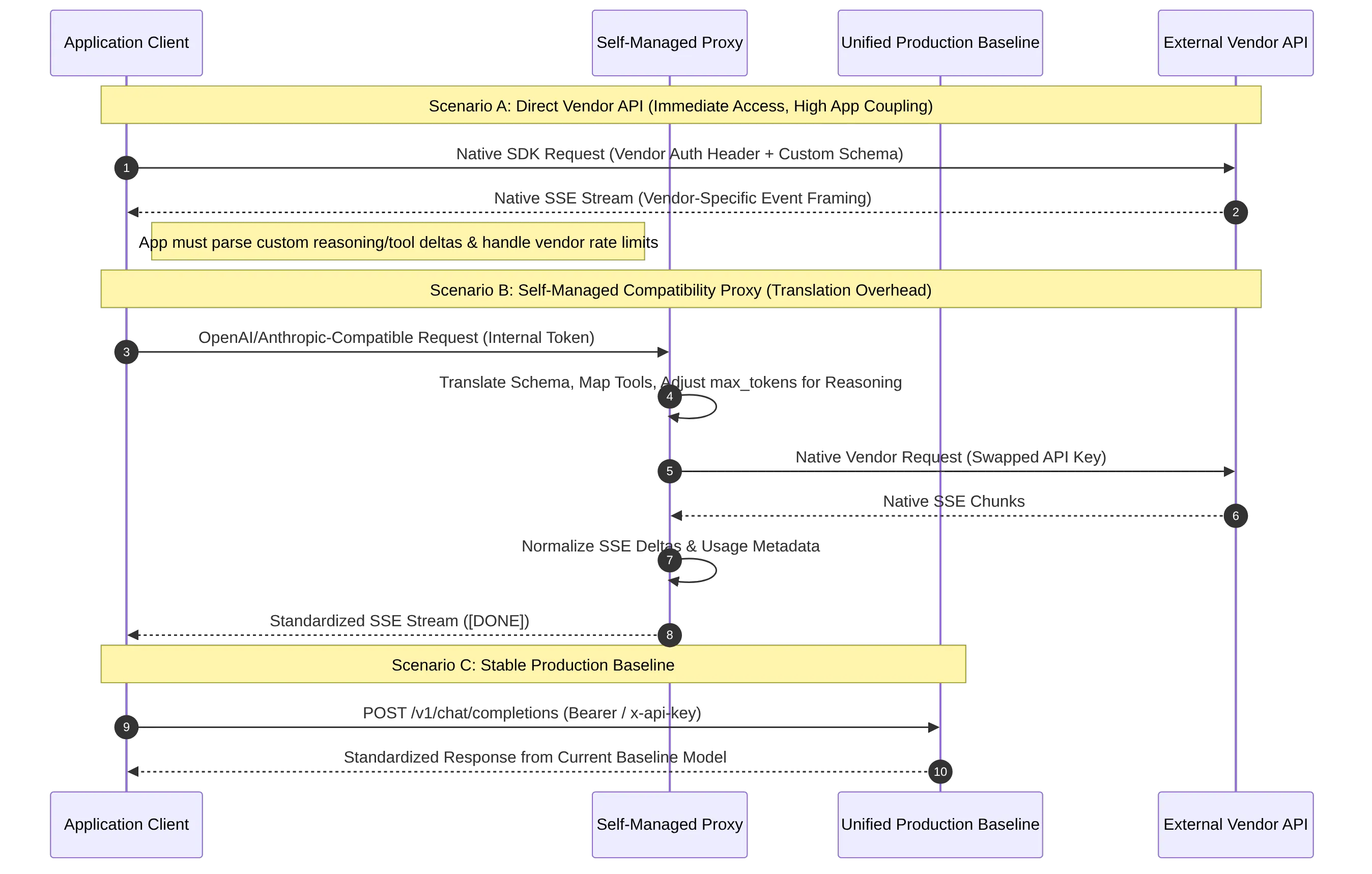
The sequence diagram below demonstrates the runtime request lifecycle, header transformation, and failure surface differences across the three approaches when handling a complex streaming tool-call request.
1. Integration Effort and SDK Maintenance
Direct API: Requires importing and maintaining vendor-specific libraries or writing custom HTTP adapters per provider. Every time a vendor updates its API version or deprecates a parameter, application teams must test and redeploy their core services.
Self-Managed Proxy: Shifts the maintenance burden from product engineers to platform engineers. Application code remains clean, but the infrastructure team must continuously update adapter mappings, maintain containerized proxy instances, and patch streaming edge cases whenever an upstream vendor modifies its response schema.
Production Baseline / Unified API: Requires no launch-specific production code. The live application stays on its established base URL and authentication contract while the candidate is evaluated separately.
2. Architectural Control and Payload Fidelity
Direct API: Provides uncompromising access to every beta header, multimodal input format, structured output schema, and reasoning parameter on launch day.
Self-Managed Proxy: Offers high architectural control over request logging and secret injection, but suffers from the "lowest common denominator" problem unless you pass vendor-specific parameters through custom extension fields (
extra_body).Production Baseline / Unified API: Best when operational consistency matters more than release-day adoption. Promote a candidate only after it clears the same quality, latency, reliability, and cost gates.
3. Production Reliability and Rate-Limit Management
Direct API: Every microservice must implement its own exponential backoff, jitter, timeout handling, and token quota tracking. If a newly launched flagship model experiences day-one capacity brownouts or strict tier-1 rate limits, your application absorbs those
429 Too Many Requestsand503 Service Unavailableerrors directly.Self-Managed Proxy: Centralizes retry logic and rate-limit queuing in one service, but introduces a new single point of failure (SPOF). If your proxy is not load-tested for high-concurrency SSE streaming connections, the proxy itself can become a latency bottleneck or suffer memory leaks under peak load.
Production Baseline / Unified API: Keeps current workloads on known infrastructure with consistent request handling and token accounting while the candidate is measured offline.
4. Vendor Lock-In and Migration Debt
Direct API: High migration debt. Scattering provider-specific message structures and tool schemas throughout your business logic makes future model switching a multi-sprint refactoring project.
Self-Managed Adapter: Low application-layer lock-in but moderate infrastructure debt. If the candidate is later promoted through a managed route or replaced by another model, the temporary adapter can be retired without changing business logic.
Production Baseline / Unified API: Lowest launch-driven migration debt because the application retains a stable request contract and treats model identity as configuration.
Comprehensive Architectural Comparison Matrix
Evaluation Dimension | Option 1: Direct Official Endpoint | Option 2: Self-Managed Adapter | Option 3: Current Production Baseline |
|---|---|---|---|
Launch-Day Evaluation | Immediate in an isolated harness | Available after adapter conformance tests | Uses the established baseline for comparison |
Application Code Impact | High if vendor SDK types escape the test adapter | Low when translation stays behind one internal contract | None for live application code |
Payload and Feature Fidelity | Native request surface | Depends on adapter coverage and tests | Uses documented production capabilities |
Streaming Maintenance | Provider-specific parsing in the test client | Adapter team owns normalization and edge cases | Existing production parsing remains unchanged |
Authentication Scope | Separate evaluation credentials | Credentials centralized in adapter infrastructure | Existing production secret boundary |
Infrastructure Overhead | Isolated evaluation runner | Adapter hosting, load testing, and maintenance | Existing managed endpoint |
Migration Debt | High if coupled directly to business logic | Moderate and contained in the adapter layer | Minimal launch-driven change |
Visualizing the Trade-Off Space
Before committing engineering sprints to a launch-day integration, map each option by implementation effort, operational ownership, and access to model-specific features.
The quadrant chart below positions the three strategies—plus a pragmatic hybrid escape hatch—across engineering and operational effort and access to model-specific features.
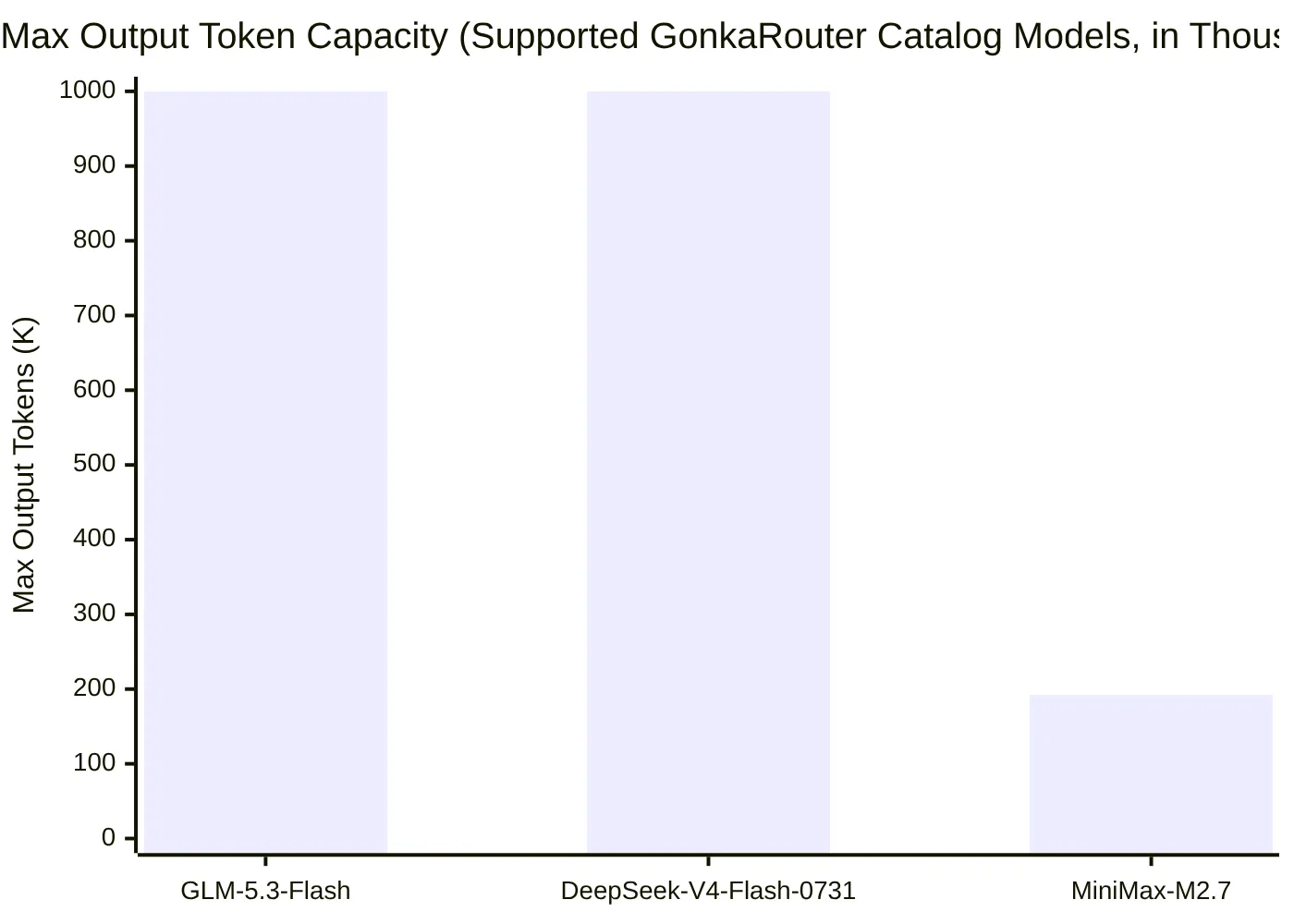
For the production-baseline path, consult the live GonkaRouter model catalog for current context and output limits instead of hardcoding specifications into the architecture decision.
Practical Engineering Checklist and Decision Framework
When a major launch announcement drops—such as OpenAI's GPT-6 Sol and Luna, updates on Anthropic's models page, or Google's Gemini 4 Argon builder showcase—run this five-step checklist before writing production integration code.
Step 1: Audit Capability Necessity vs. Launch Hype
Does the candidate unlock a previously impossible product requirement? If the answer is yes, prioritize a scoped official-endpoint evaluation and quantify the benefit before designing production integration.
Is this a general quality, speed, or cost optimization test? Benchmark the candidate against the current baseline first. As discussed in our guide on how verified AI models help you avoid bad picks, measured workload results are more useful than launch positioning.
Step 2: Isolate Evaluation from Production Plumbing
Run offline benchmarks before touching production services. Never rip out your gateway integration in production just to evaluate a new model. Run a scoped evaluation script in an isolated sandbox against 50 to 200 representative production prompts.
Compare against your current baseline. Benchmark the external model's output quality, P95 latency, and total cost per successful task (including retries and hidden reasoning tokens) against the supported models you can already call today via a unified API.
Step 3: Choose Between Direct API and Proxy (If Immediate Adoption Is Mandatory)
If your offline evaluation proves that the newly launched external model is mandatory for an upcoming product milestone:
Use Option 1 (Direct API) only inside a strict Adapter Interface if only one microservice needs the model and requires deep proprietary parameters that do not map to OpenAI-compatible or Anthropic-compatible schemas. Never leak vendor SDK types outside the adapter class.
Use Option 2 (Self-Managed Proxy) if multiple internal teams and services need immediate access to the new model and you have dedicated platform engineering capacity to maintain schema translation, SSE stream normalization, and reasoning-token quota accounting.
Step 4: Verify Protocol Boundaries and Token Configuration
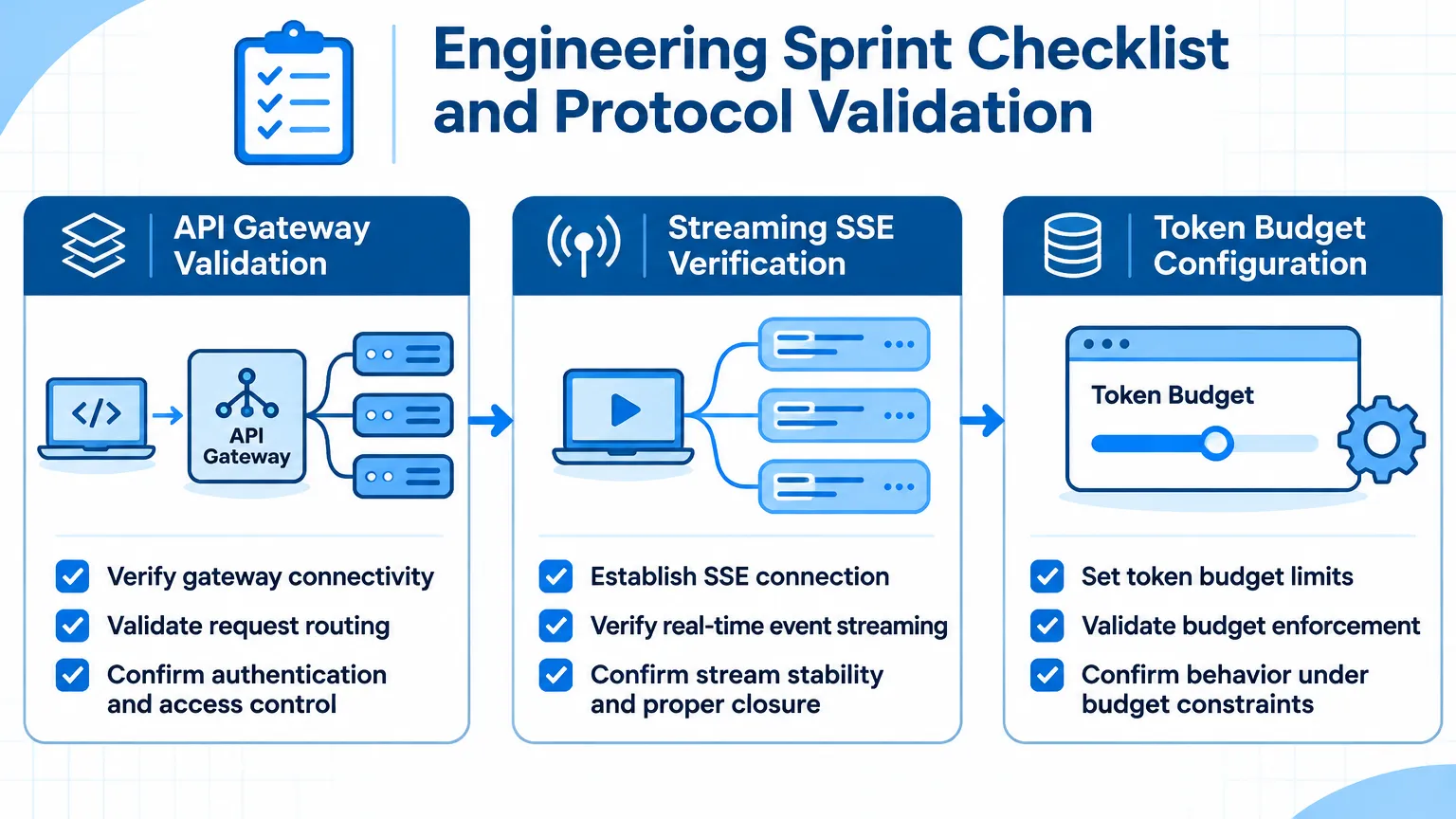
Regardless of whether you build a temporary proxy or stick with your unified gateway for supported models, validate these four protocol details before deployment:
Verify Endpoint Path Matching: Ensure client SDKs construct the exact URL paths required by the target endpoint (for example, the GonkaRouter documentation specifies
https://api.gonkarouter.iowith exact path matching such asPOST /v1/chat/completionsandPOST /v1/messages, returning404 page not foundon invalid paths).Prevent Reasoning-Token Starvation: Confirm that
max_tokensis set high enough (for instance,4096or higher on reasoning-capable models) so internal chain-of-thought or reasoning steps do not prematurely truncate the user-visible response.Test SSE Stream Termination and Tool Call Deltas: Run automated integration tests verifying that streaming connections handle partial JSON tool arguments, mid-stream rate-limit errors, and final token usage reporting cleanly.
Standardize Authentication Headers: Avoid mixing credential styles across services; standardize on either
Authorization: Bearer <KEY>orx-api-key: <KEY>and store keys in a centralized secret manager.
Step 5: Plan the Decommissioning Path
Tag temporary direct integrations as technical debt. If you bypass your gateway or spin up a self-managed bridge proxy for a hot model, create a tracking ticket with clear criteria for folding that traffic back into your unified gateway architecture once catalog support matures.
Conclusion and Next Steps
When a high-profile foundational model launches, there is no universal integration answer—only explicit architectural trade-offs:
Calling the direct vendor API buys you immediate, 100% native feature fidelity at the cost of SDK fragmentation, multi-vendor credential sprawl, and higher migration debt.
Deploying a self-managed compatibility proxy preserves a clean OpenAI-compatible or Anthropic-compatible contract in your application code, but shifts heavy maintenance responsibility—schema translation, SSE streaming normalization, and reasoning-token accounting—onto your infrastructure team.
Keeping the current production baseline avoids release-driven rework while the team gathers enough evidence to make a deliberate promotion decision.
Unless a candidate model unlocks a capability that is essential to a near-term product milestone, keep production architecture stable, isolate experiments behind a clean adapter, and promote changes only after workload-specific evidence clears the agreed gates.
To establish a production baseline through a single OpenAI-compatible or Anthropic-compatible API format: