What Is DeepSeek R1?
DeepSeek R1 is a reasoning-focused model release from DeepSeek. Its publication drew attention to open-weight reasoning models and reinforcement-learning-based post-training. For developers, distinguish downloadable weights, a hosted API, and a third-party gateway: each has different operating requirements, model identifiers, pricing, and data-handling terms.
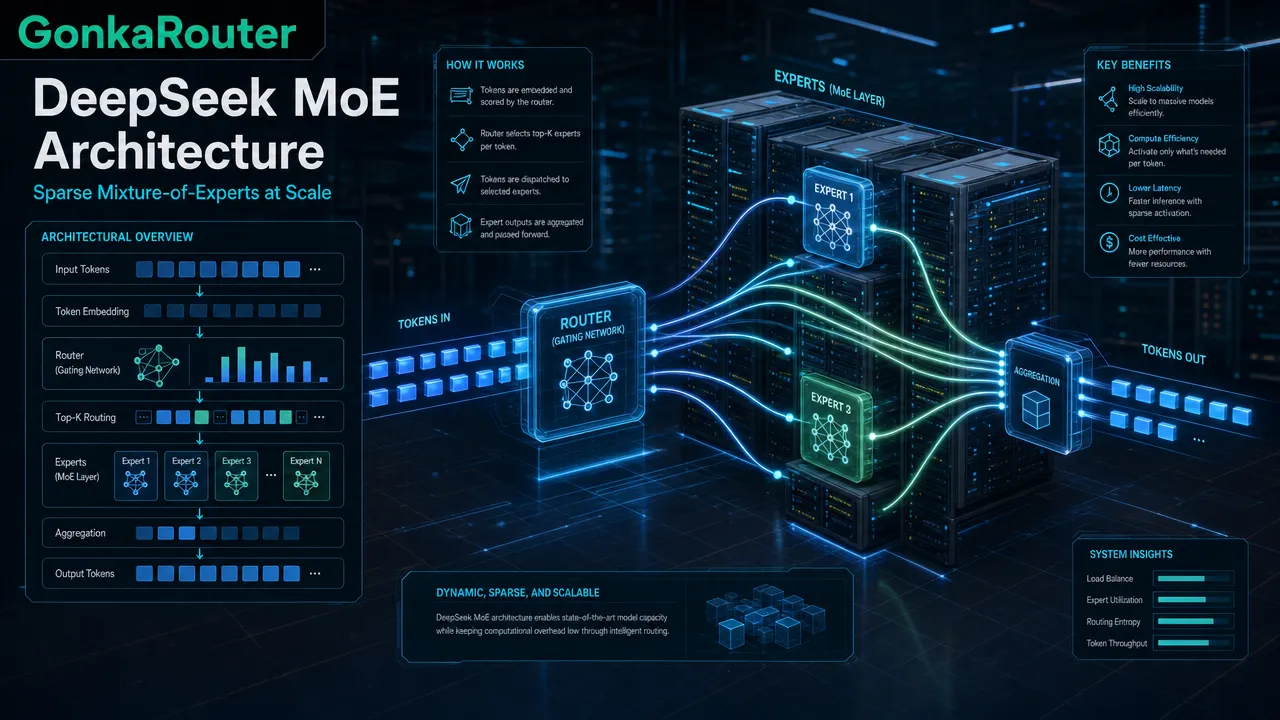
For technical details, use the official DeepSeek-R1 repository and the DeepSeek API documentation. Model versions and API aliases can change, so confirm current documentation before writing code or budgeting production use.
Weights, Chat, and API Access Are Different
Open weights can be self-hosted, but running them requires suitable hardware, inference software, capacity planning, security controls, and maintenance. A browser chat product is designed for interactive use and does not automatically provide credentials for an application. A hosted API uses account credentials and the provider’s current API contract.
Before integrating an API, verify the current model ID, endpoint, context and output limits, supported parameters, rate limits, pricing, and retention terms. Store API keys on a server, never in frontend code or a public repository. Test streaming and structured outputs against the exact client library and version you intend to deploy.
Evaluate It Against Your Workload
Use a fixed test set that reflects your production tasks. Measure correctness, format compliance, tool-call quality, latency, and cost per accepted result. Include failure cases and human review for high-impact decisions. Published benchmarks can help identify questions to test, but do not predict performance on your prompts.
A gateway can simplify client integration, but it does not make every model available. GonkaRouter currently supports GLM-5.3-Flash, DeepSeek-V4-Flash-0731, and MiniMax-M2.7; DeepSeek R1 is not in that catalog. See the current supported models. API-format compatibility does not mean official OpenAI or Anthropic model access.
Understand the DeepSeek R1 Model Family
The R1 name can refer to several artifacts, so implementation starts with identification. Record the exact repository checkpoint or hosted API model ID you intend to use. Distilled variants, full checkpoints, and API aliases can differ in size, hardware requirements, context limits, and behavior. Read the license and model card associated with that exact artifact before distributing weights or building a commercial service around it.
Reasoning-focused models are useful when the task benefits from multi-step problem solving, but they are not automatically the best choice for every request. Short classification, simple extraction, and latency-sensitive interactions may be served more efficiently by a smaller instruction model. Evaluate R1 on the work it would actually perform and compare it with a simpler baseline.
Do not treat visible reasoning length as a quality metric. Score the final result against verifiable requirements. For code, run tests and static checks. For mathematics, verify the answer independently. For structured tasks, validate a schema. For high-impact recommendations, require evidence and human review. A fluent explanation can still contain a critical error.
Plan a Self-Hosted Deployment
Self-hosting gives a team control over the serving environment, but it creates an infrastructure project. Estimate memory requirements for the selected checkpoint and precision, then choose an inference engine that supports the architecture. Benchmark prefill and decode performance with realistic context lengths. Capacity planning should cover concurrent requests, queue time, model load time, and the effect of long generations.
Protect the serving endpoint with authentication, network controls, request size limits, and rate limits. Separate customer workloads where required, encrypt traffic, and define how prompts and outputs are logged. Monitor GPU memory, utilization, queue depth, time to first token, tokens per second, errors, and rejected requests. Patch the operating system and serving stack, and verify new model files before promotion.
Cost analysis must include hardware utilization, idle capacity, engineering time, observability, backups, and incident response. A self-hosted route can be economical at sustained volume, while a hosted API may be more practical for variable demand. Compare both using cost per accepted task and expected utilization rather than raw GPU price or token rate alone.
Integrate a Hosted API Safely
For hosted access, keep the API key in a server-side secret manager and use separate credentials for environments when possible. Set request deadlines, maximum output tokens, and a bounded retry policy. Retry temporary rate limits or server failures with backoff, but stop on invalid authentication, unsupported parameters, or context-limit errors.
Test streaming and non-streaming responses with the exact SDK version used in production. Verify how usage is reported, which parameters are accepted, and how errors are encoded. Validate all structured output before downstream use. For agents, enforce tool permissions in the application, make side effects idempotent, and require approval for consequential actions.
Review the provider's current retention and data-use terms before sending proprietary or personal data. Minimize stored prompt content and capture operational metadata separately. If the workload has regional or regulatory constraints, confirm that the access path meets them rather than inferring compliance from the model name.
Maintain a Reproducible Evaluation
Create a versioned test set with representative prompts, expected outcomes, and failure cases. Record model ID, endpoint, settings, prompt version, and test date. Measure first-pass acceptance, latency, token use, retry rate, and total cost. Re-run the set when an alias, checkpoint, client, or prompt changes.
Use a staged rollout for production. Begin with a low-risk workload, compare live metrics with the test results, and define rollback thresholds in advance. The same discipline applies whether R1 runs on your own infrastructure or through a hosted service: model access is only the first step; dependable operation comes from validation, security, measurement, and controlled change.
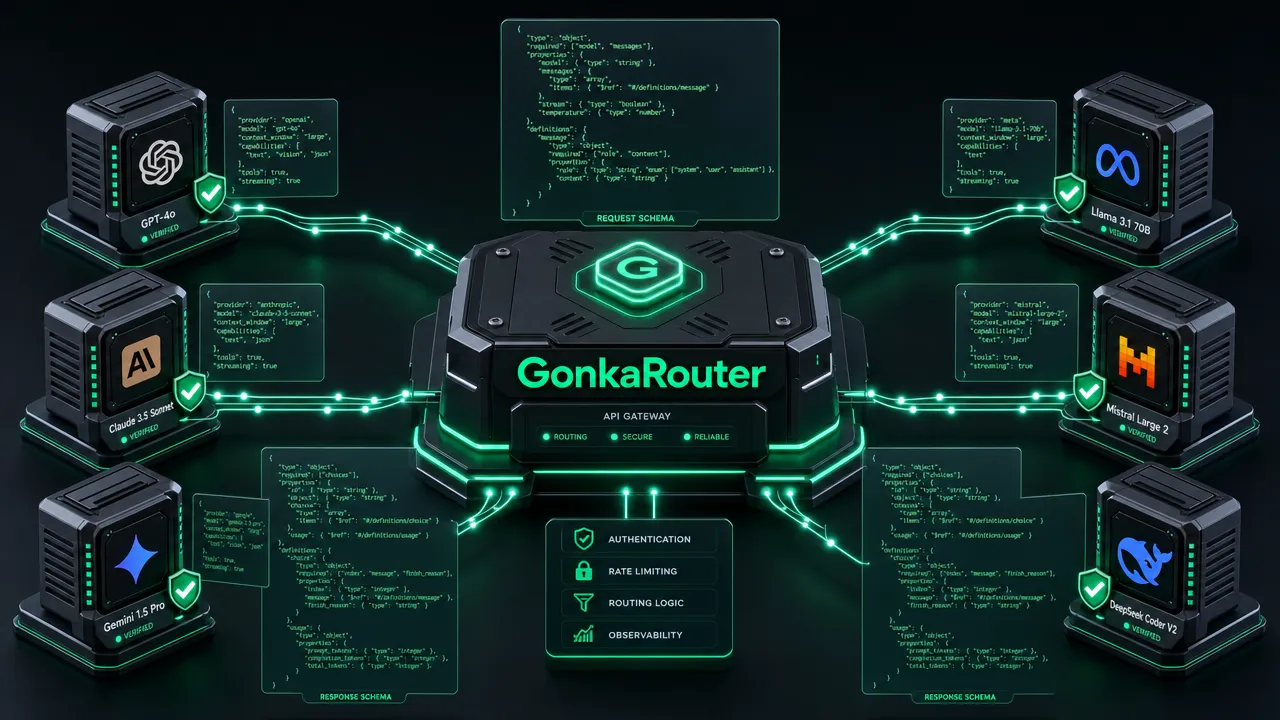
If you need DeepSeek R1 specifically, compare the official hosted API with self-hosting based on your workload and operating constraints. If you want to test a supported GonkaRouter model through a unified API, register on the official site, create an API key, and evaluate it using the same test set.