DeepSeek-R1 is the stronger fit for teams that need open-weight reasoning and infrastructure control, while Qwen Max is the clearer choice for a managed, versioned API through Alibaba Cloud Model Studio.
The query deepseek r generally refers to DeepSeek-R1, not DeepSeek-V3 or DeepSeek-V3-Base. That distinction matters: DeepSeek-R1 is a reasoning-model family trained from DeepSeek-V3-Base, whereas deepseek-v3-0526 is a separately versioned release. Developers should name the exact checkpoint or API model ID in architecture decisions, evaluation reports, and production telemetry.
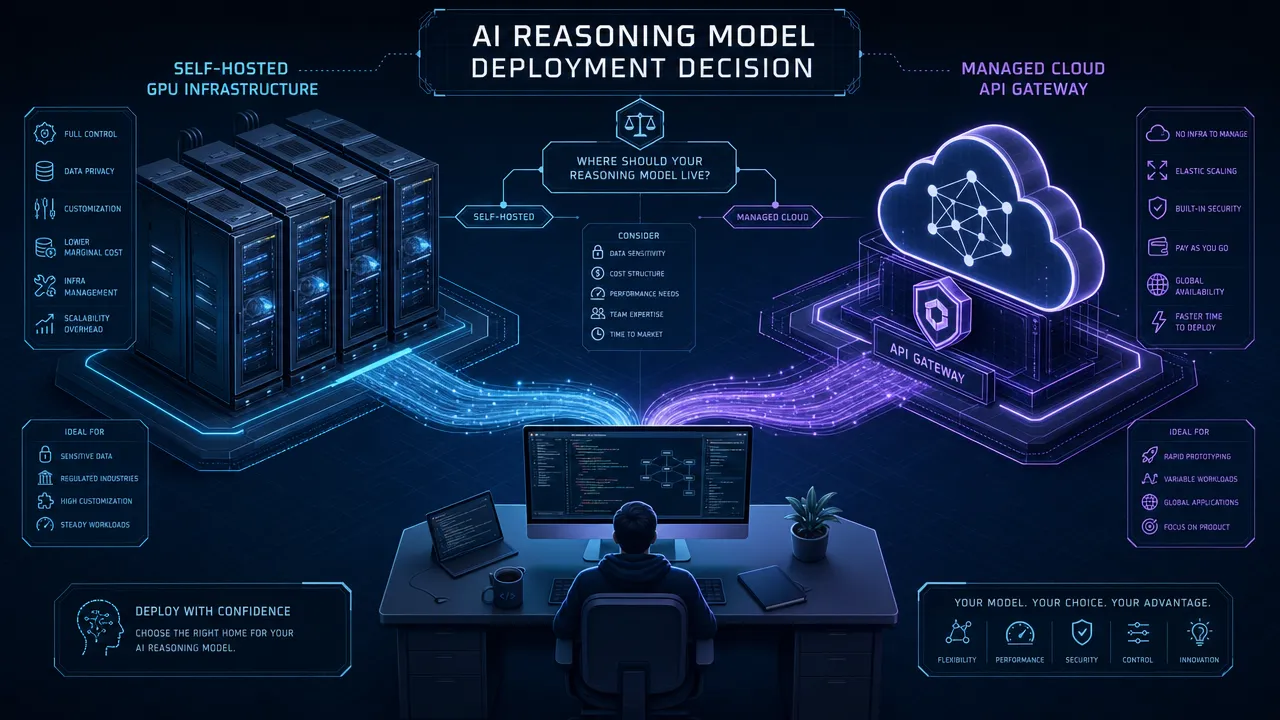
Start with deployment control and API lifecycle
DeepSeek-R1 and Qwen Max are not directly equivalent products. The most important decision is not which family has the most impressive marketing claim, but whether your application requires weight-level control or a current managed endpoint.
Decision factor | DeepSeek-R1 | Qwen Max family |
|---|---|---|
Primary deployment model | Open weights and self-hosting | Managed Alibaba Cloud API |
Exact model naming | DeepSeek-R1, with checkpoint identification where applicable | Pin |
Architecture disclosure | MoE, 671B total parameters, about 37B active parameters per token | Model-specific. Qwen3.8-Max is disclosed as MoE with 2.4T total and 95B active parameters |
License and control | MIT-licensed weights support permitted modification and controlled deployment | Verify the exact model's license and availability rather than assuming every Qwen Max variant is self-hostable |
Managed first-party route | Historical | Model Studio and DashScope provide documented managed access |
Best fit | Internal reasoning workloads, research, custom serving | Production API integration, regional endpoint selection, managed billing |
DeepSeek-R1 is available as open model weights from DeepSeek. That makes it compelling when a team needs to control quantization, inference hardware, observability, access boundaries, and model upgrades internally.
Qwen Max is a family label, not a stable technical specification. Alibaba Cloud still documents legacy qwen-max, while its pricing documentation identifies qwen3-max as a current flagship naming path. Treat these IDs as separate deployment targets with potentially different behavior, pricing, context limits, and feature support.
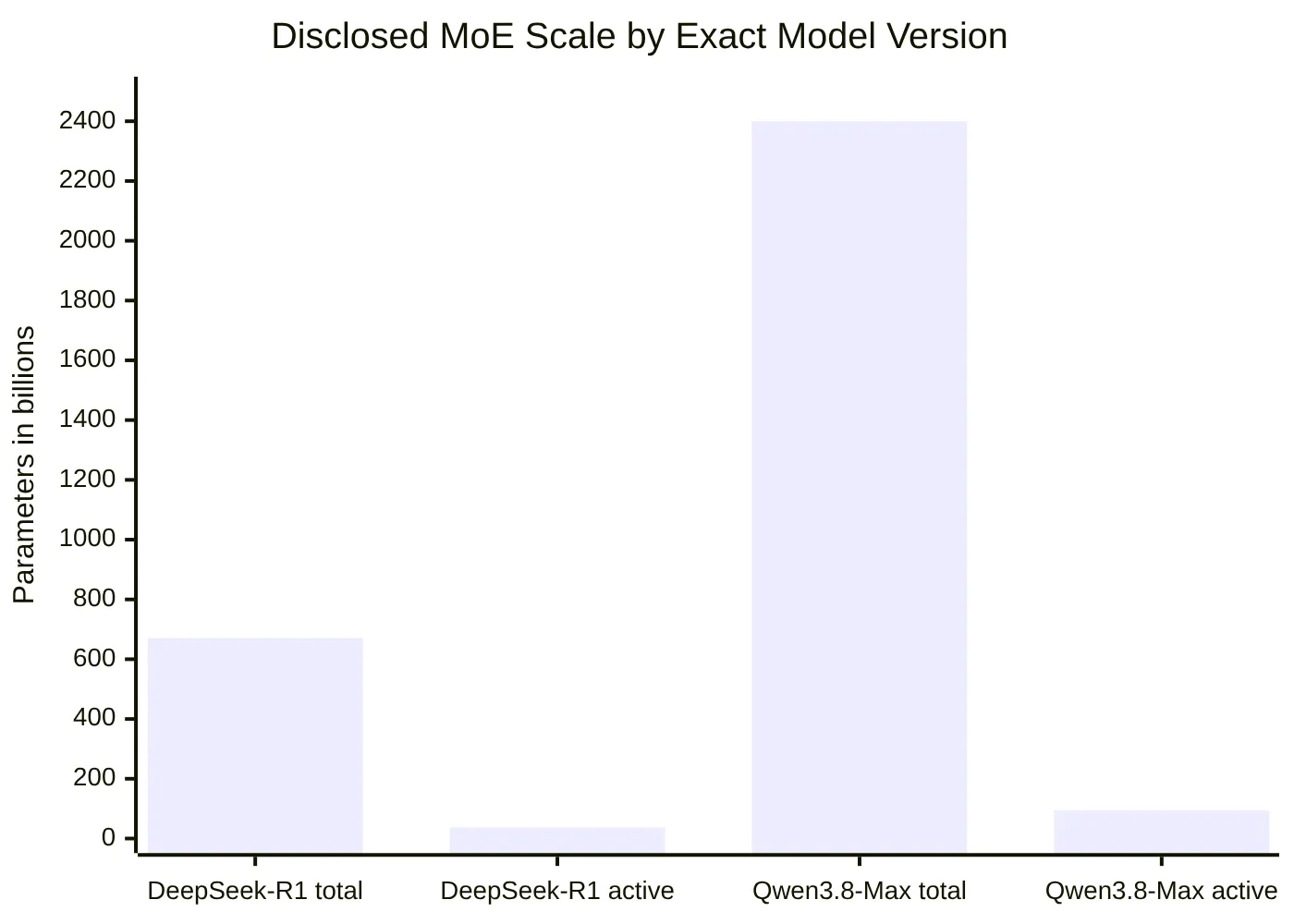
The chart measures disclosed architecture scale, not answer quality. Total and active parameters cannot substitute for workload-specific evaluation.
Where DeepSeek-R1 has an operational advantage
DeepSeek-R1 was designed for multi-step reasoning. DeepSeek reports evaluation results across mathematics, science, coding, and general reasoning, including 79.8 on AIME 2024, 97.3 on MATH-500, 71.5 on GPQA Diamond, and 65.9 on LiveCodeBench under its documented settings.
Those results make DeepSeek-R1 a credible candidate for algorithm derivation, code explanation, debugging hypotheses, test generation, and offline analytical workflows. They do not prove that it will outperform Qwen Max on a proprietary repository, tool-use workflow, or domain-specific retrieval corpus.
Its open-weight posture changes the operational equation:
You can run inference inside infrastructure you control.
You can select serving frameworks, quantization strategies, and GPU capacity.
You own responsibility for authentication, logging, retention, patching, abuse prevention, and incident response.
You must measure throughput and cost at realistic concurrency, not just single-request latency.
The MIT license grants broad model-use rights, but it is not an enterprise privacy certification. Teams handling confidential or regulated data still need strong controls around prompts, outputs, logs, embeddings, backups, and human-review workflows.
DeepSeek also has a public chat interface and developer documentation. However, chat access and API availability are different concerns. The historical deepseek-reasoner alias was associated with hosted reasoning access, but developers should inspect the live catalog before treating that identifier as deployable.
Compare managed API access, regions, and integration paths
Qwen Max is the more straightforward option when a team prefers a current first-party managed API over operating a large reasoning model itself. Alibaba Cloud Model Studio and DashScope expose Qwen access through a compatible-mode API pattern familiar to OpenAI SDK users.
The practical rule is simple: use the exact active model ID from your account and region. Do not build a production contract around the broad phrase "Qwen Max."
A minimal Python integration can keep provider configuration outside application code:
python 复制代码

Configure DASHSCOPE_BASE_URL for the appropriate compatible-mode endpoint, then pin QWEN_MODEL_ID to the approved deployment version. Consult Alibaba Cloud Model Studio pricing and the documented legacy qwen-max model page before estimating production costs.
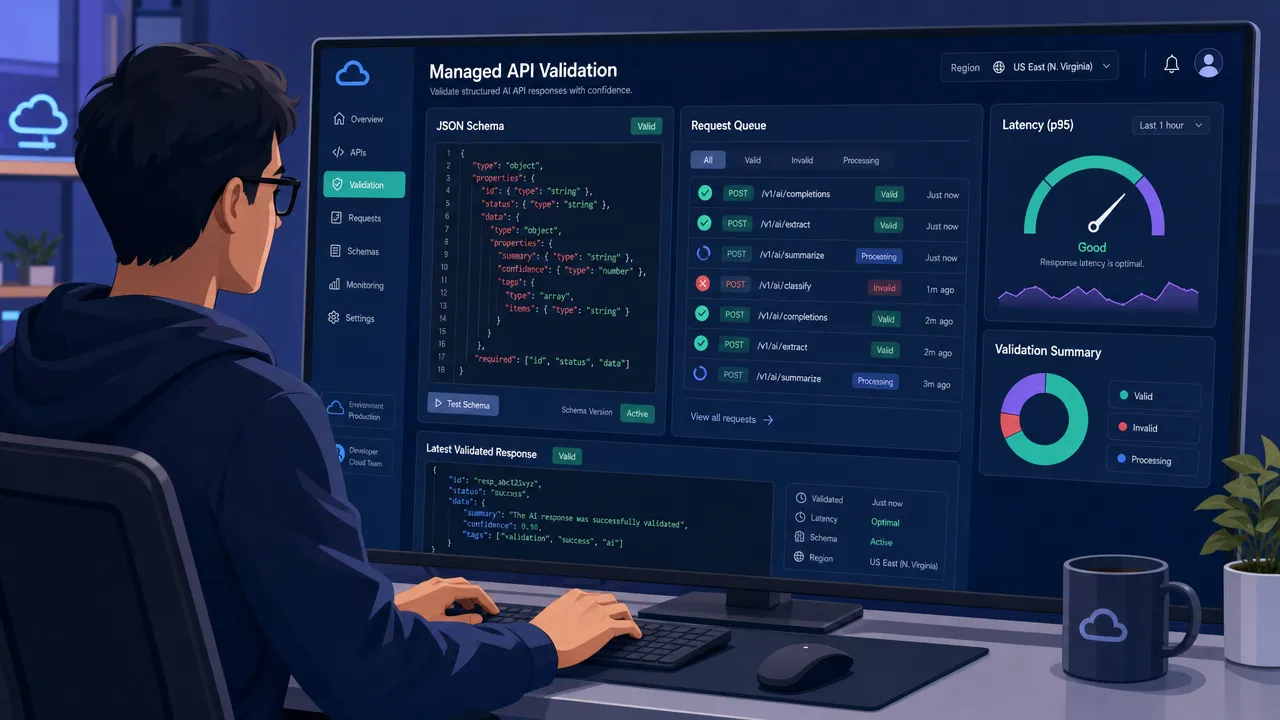
Managed access does not remove validation requirements. Test streaming, JSON response formatting, tool calling, context limits, rate limits, retries, and error handling against the exact Qwen Max model and region you plan to use.
Benchmark both models on production tasks
Public benchmarks are useful screening signals, not production verdicts. DeepSeek publishes an official DeepSeek-R1 benchmark table, but the reviewed Qwen Max material does not establish an equivalent same-setting scorecard for the exact current API version.
That makes claims such as "DeepSeek-R1 beats Qwen Max" technically weak unless both models are evaluated under identical conditions:
Evaluation dimension | What to measure |
|---|---|
Quality | Correctness, groundedness, code-test pass rate, human preference |
Agent reliability | Tool-call schema validity, argument safety, retry rate |
Performance | p50 and p95 latency, tokens per second, queue time |
Cost | Input, output, cached tokens, retries, repair calls, review effort |
Privacy | Data path, retention, account terms, region, access controls |
Version stability | Model ID, release date, prompt behavior, deprecation policy |
Use 50 to 200 representative tasks rather than a handful of polished examples. Preserve fixed prompts, test fixtures, expected schemas, and route metadata. For consequential workloads, add human review and deterministic checks before allowing side-effecting tools to execute.
The most useful financial metric is cost per successful AI task, not the lowest listed token price. A cheaper model can cost more when invalid JSON, tool failures, repeated reasoning loops, or manual corrections increase total work.
Separate pricing analysis from reliability testing
A direct DeepSeek-R1 API price comparison is not currently safe without first verifying that an active hosted route maps to the displayed DeepSeek price table. R1 weights remain downloadable, but self-hosting economics involve far more than token accounting.
For legacy Beijing-region qwen-max pricing, an illustrative workload of 1 million uncached input tokens and 200,000 output tokens produces this calculation:
Usage component | Calculation | Estimated cost |
|---|---|---|
Input | 1.0 x $0.345 per million tokens | $0.3450 |
Output | 0.2 x $1.377 per million tokens | $0.2754 |
Total | Input plus output | $0.6204 |
This is an arithmetic example, not a forecast. It excludes caching, batch eligibility, system prompts, retries, taxes, regional differences, and future price changes.
Request caching can substantially affect economics for repeated system prompts, long policy documents, stable retrieval context, or recurring agent instructions. It also requires careful tenant isolation and invalidation rules. Never assume cache behavior is identical between DeepSeek-R1 self-hosting and a Qwen Max managed route.
Reliability engineering should include bounded retries, exponential backoff for transient failures, output-schema validation, idempotent tools, and controlled errors when no approved route satisfies policy. For a more detailed implementation pattern, see this production model-failover checklist.
Define routing boundaries before using both models
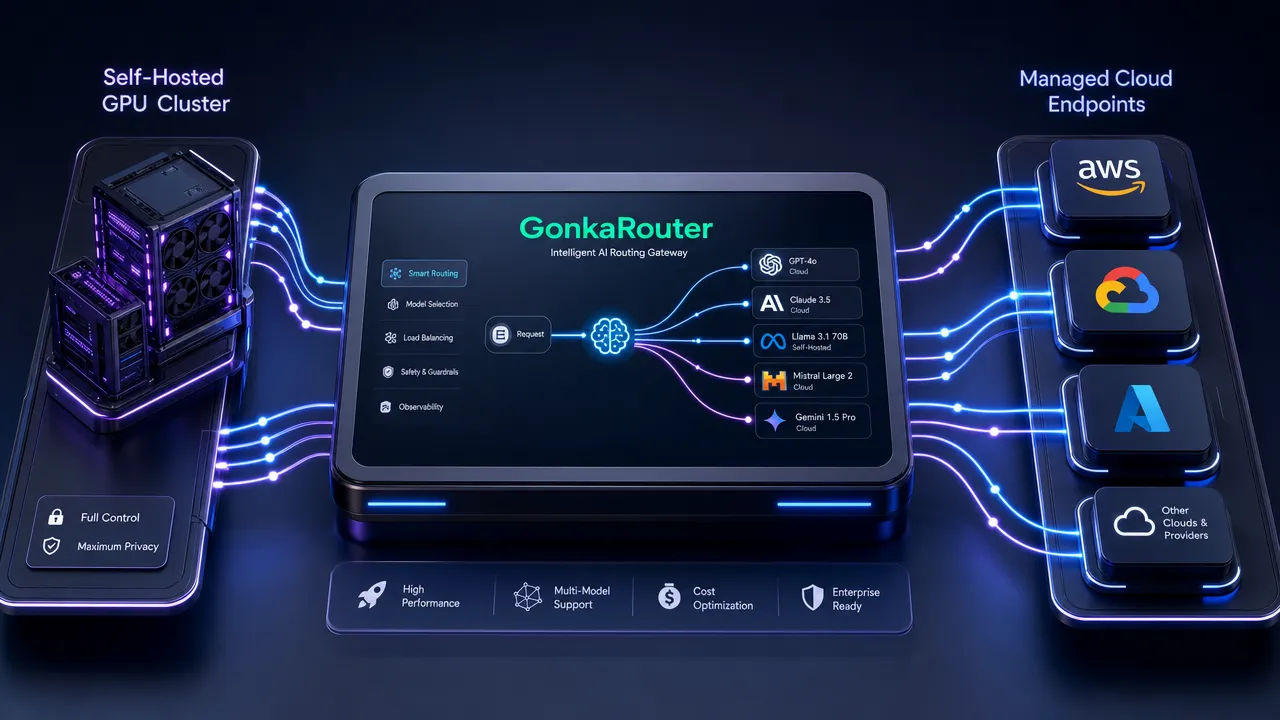
A router becomes valuable when workloads have genuinely different requirements. For example, an organization might run DeepSeek-R1 internally for controlled reasoning and use Qwen Max for managed, scalable general-purpose tasks.
A routing layer must not conceal differences in context capacity, data handling, output formats, pricing, or safety behavior. It should preserve the provider route, model ID, version, latency, token usage, and validation outcome for every request.
GonkaRouter is one concrete option for teams evaluating model routing and API portability, but its supported-model catalog should be checked live before assuming availability of a particular DeepSeek-R1 or Qwen Max route. A router is an abstraction layer, not proof of model support.
Choose DeepSeek-R1 when open weights, self-managed infrastructure, and controlled reasoning deployment outweigh operational overhead. Choose the exact active Qwen Max API version when managed lifecycle, provider operations, and regional API access matter more. Use both only after benchmarking the same prompts, schemas, latency budget, and data policy across the routes.
Before choosing an access layer, check GonkaRouter's live model catalog and verify that the exact model version you need is available.