Developers reduce LLM costs in 2026 by routing simple tasks to lower-cost models, caching repeated context, limiting output tokens, and choosing the cheapest llm api that still meets task-quality requirements.
The market is no longer defined by one headline input-token price. A real bill depends on input tokens, output tokens, cached-input discounts, batch pricing, context size, search or tool-call fees, retries, fallback rules, and engineering migration cost. For AI Agents, chatbots, content generation tools, code assistants, and enterprise workflows, the cheapest LLM inference API 2026 is the one with the lowest cost per successful task, not just the lowest listed token price.
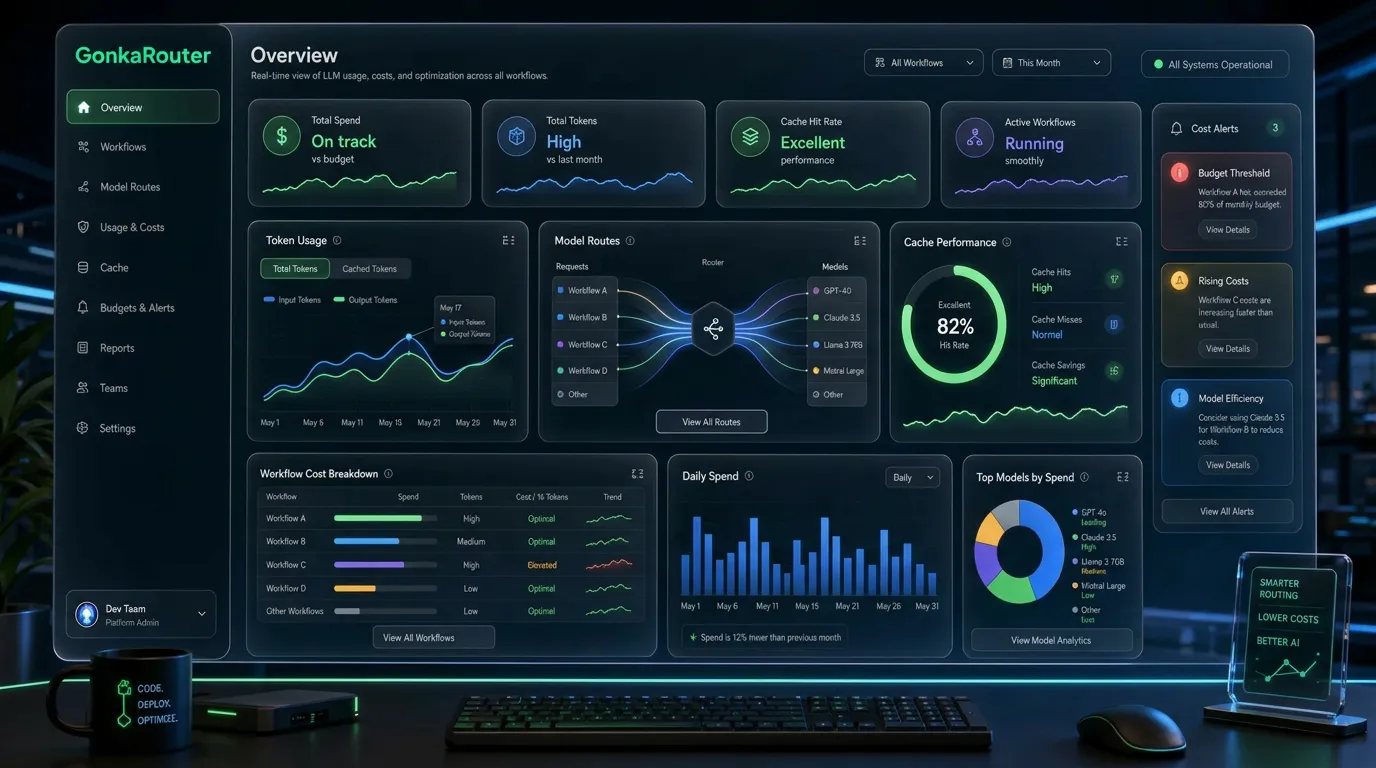
Why the cheapest llm api depends on total workflow cost
AI applications often multiply model calls behind a single user action. A basic chatbot may use one or two calls, while an AI Agent can call a model for planning, retrieval, tool selection, validation, and final response generation. Enterprise workflows can add classification, extraction, routing, summaries, and audit notes.
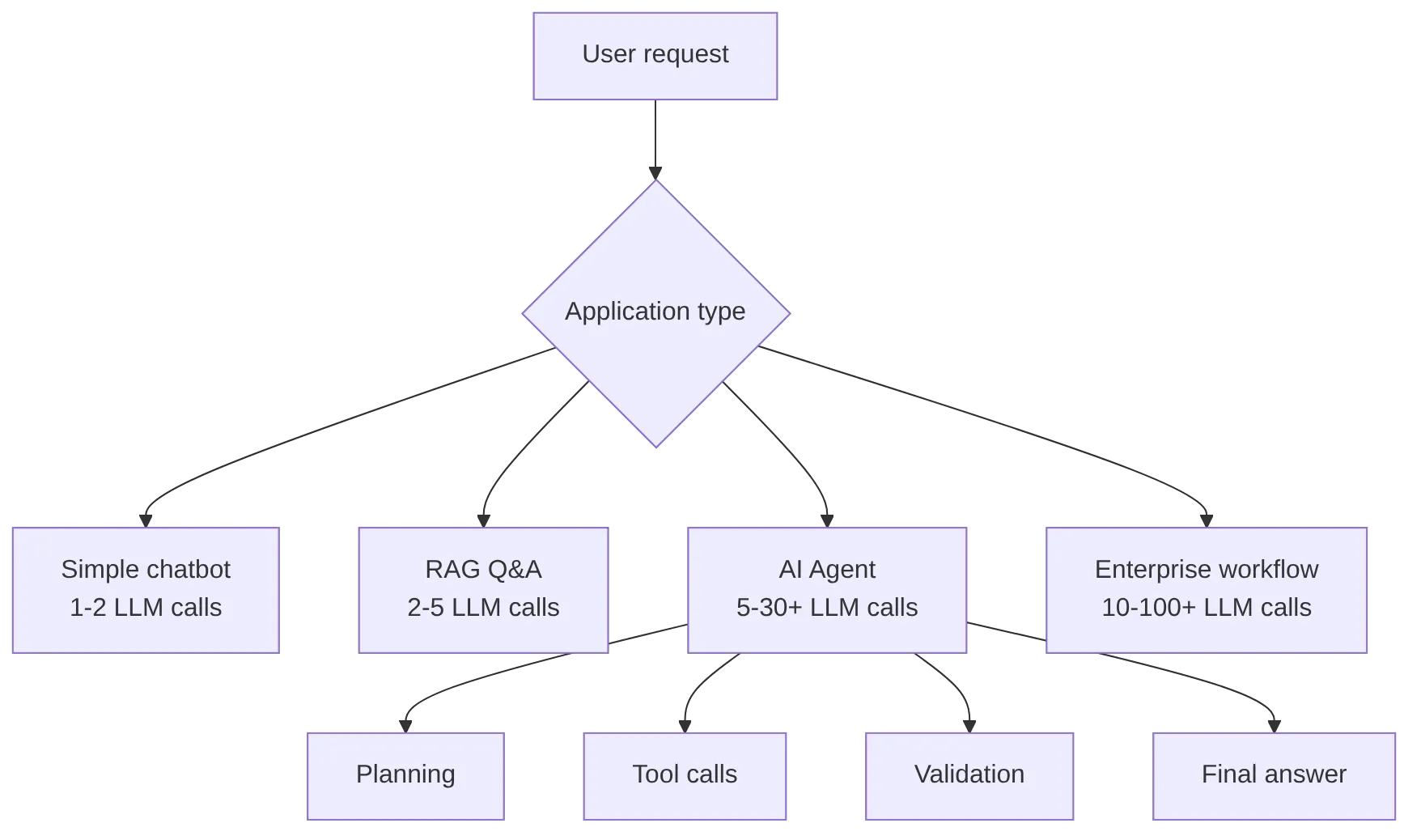
Output tokens usually deserve special attention. Public pricing examples in the research report show that output tokens can cost several times more than input tokens. OpenAI GPT-5 pricing, for example, listed GPT-5 at $1.25 per 1M input tokens and $10 per 1M output tokens, while GPT-5 Nano was listed at $0.05 per 1M input tokens and $0.40 per 1M output tokens in the retrieved official sources. The cheapest openai model may be attractive for simple tasks, but output length can still dominate the bill.
Long prompts also add hidden cost. Retrieval context, tool schemas, memory, formatting instructions, and repeated system prompts can all inflate input tokens. Retries and fallback calls create another cost layer when failure handling is not controlled.
Cheapest llm api pricing benchmarks for 2026
Pricing changes quickly, so teams should verify provider pages before production decisions. The normalized benchmark below uses the research report's retrieved pricing examples and public documentation where available. GonkaRouter pricing is based on provided brand information: token pricing as low as $0.0004 per 1M tokens for supported models.
Provider or category | Low-cost pricing example from research | Compatibility notes | Best cost caveat |
|---|---|---|---|
GonkaRouter | As low as $0.0004 per 1M tokens | OpenAI-compatible and Anthropic-compatible API formats for supported models | Supports only MiniMax-M2.7, Kimi-K2.6, and GLM-5.2 |
OpenAI | GPT-5 Nano listed at $0.05 input and $0.40 output per 1M tokens | Native OpenAI API | Output pricing can dominate |
Google Gemini / Vertex AI | Gemini 2.5 Flash-Lite example around $0.10 input and $0.40 output per 1M tokens | Native Gemini and Google Cloud surfaces | Vertex AI price varies by model, SKU, modality, context, and billing mode |
Perplexity Sonar API | Sonar example listed at $1 input and $1 output per 1M tokens | Search-focused API | "perplexity pro api pricing" is commonly searched, but Pro is not the same as Sonar API pricing |
AI gateway or router products | Varies by provider and model | Often unified API access | Gateway fees, pass-through pricing, or credit fees may apply |
For authoritative references, teams can check the OpenAI API pricing documentation, OpenAI GPT-5 model documentation, and Google Gemini API pricing. For Google Cloud deployments, review Google Cloud generative AI pricing.
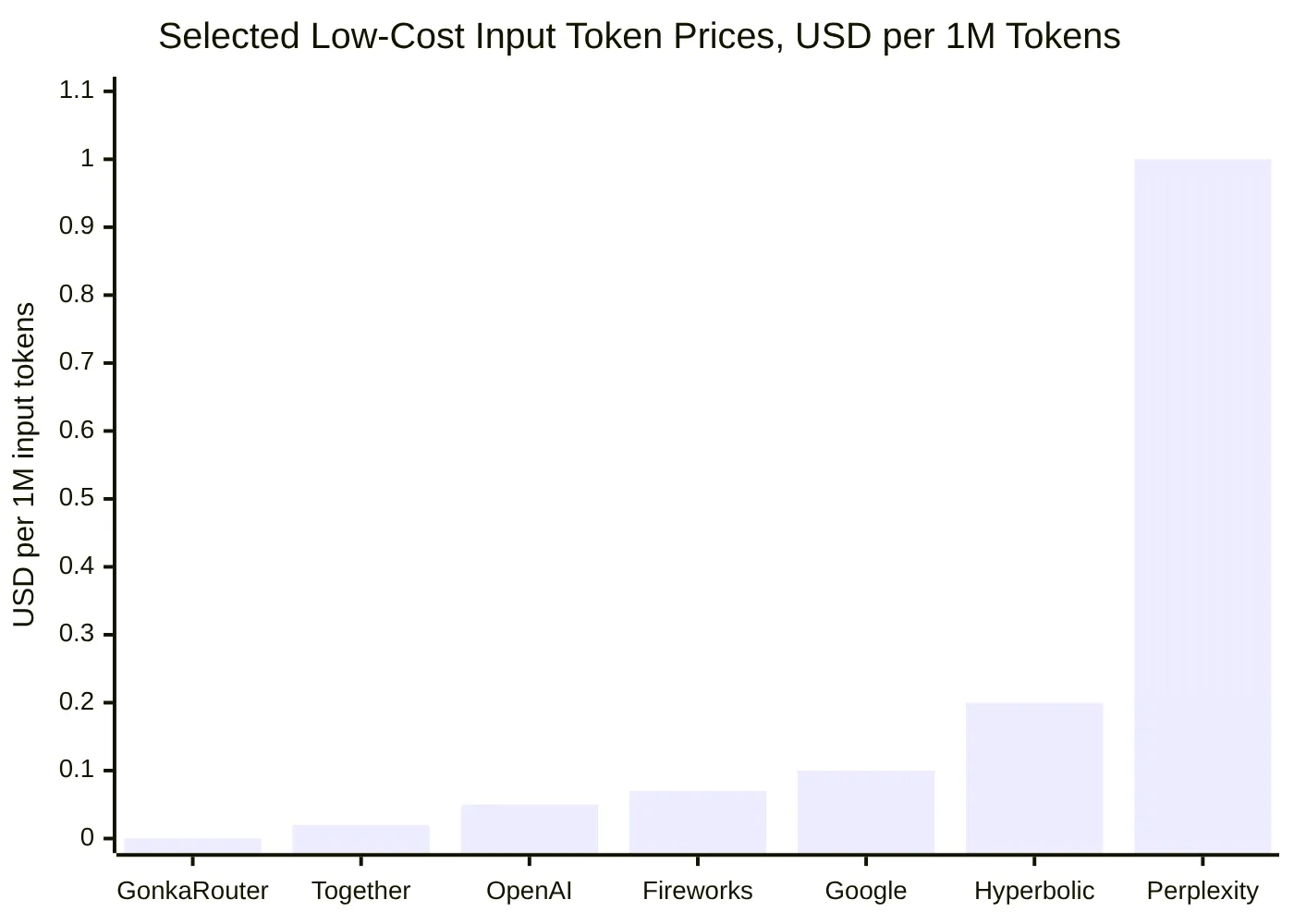
Searches for AI API $0.001 per million tokens show how aggressive cost expectations have become. GonkaRouter's stated $0.0004 per 1M tokens directly fits that ultra-low-cost search intent, but developers should still test quality, latency, and task success before migrating workloads.
Where GonkaRouter fits as a cheapest llm api option
GonkaRouter is an AI Model Router and AI Inference API built for developers who want one API for currently supported models. It uses OpenAI-compatible and Anthropic-compatible API formats, which means developers can often integrate by changing the API endpoint rather than rewriting their application.
That API compatibility is format compatibility only. GonkaRouter does not provide official OpenAI or Anthropic models. Its currently supported models are exactly:
MiniMax-M2.7
Kimi-K2.6
GLM-5.2
This focused support matters for positioning. GonkaRouter should not be evaluated as a broad model marketplace. It is better understood as a focused, low-cost AI Gateway for supported models, with a clear developer workflow: log in with email, get an API key, test supported models, and integrate into an Agent or product.
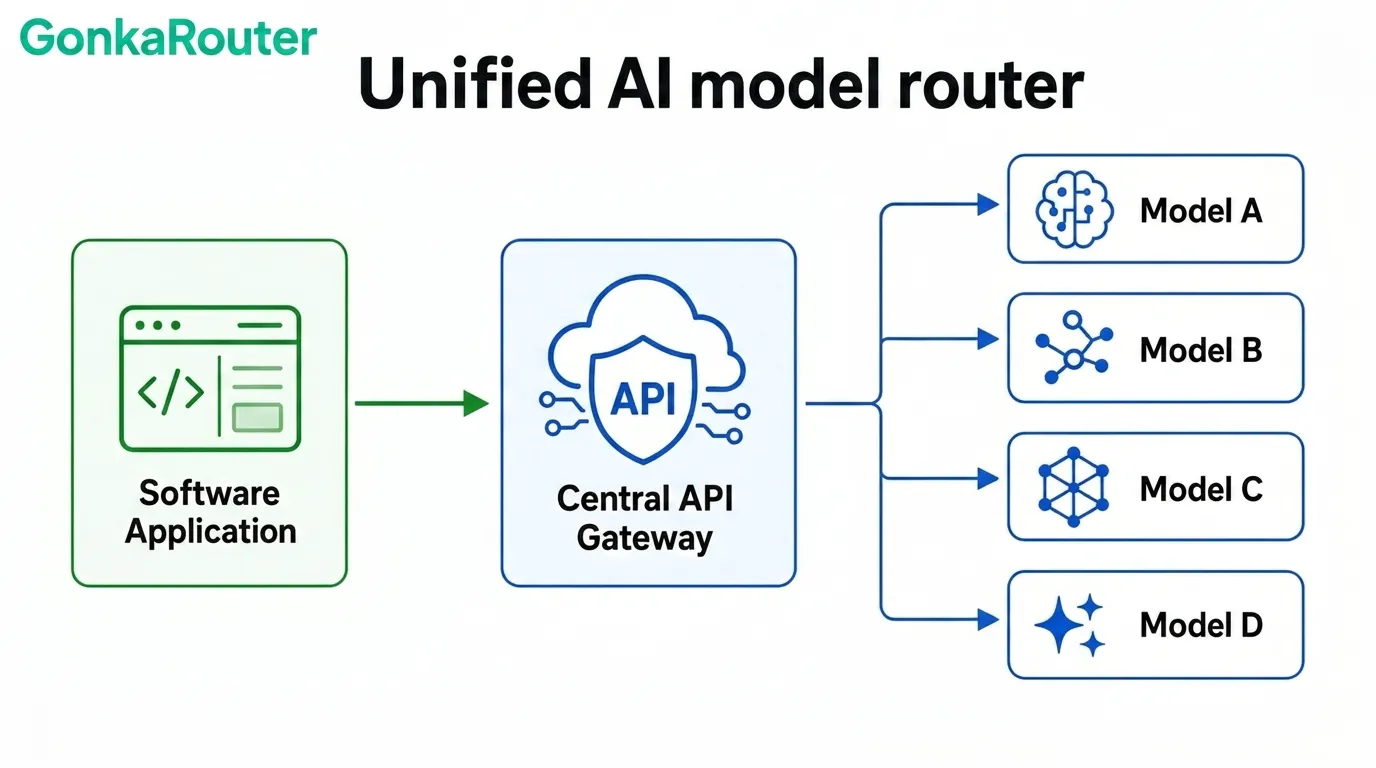
GonkaRouter's key developer advantages include:
GonkaRouter capability | Why it helps reduce llm costs |
|---|---|
One API for supported models | Reduces integration and maintenance overhead |
OpenAI Compatible API format | Helps teams migrate from OpenAI-style SDK patterns for supported models |
Anthropic-compatible API access | Gives another familiar API format for supported model access |
Pricing as low as $0.0004 per 1M tokens | Creates a strong low-cost baseline for suitable workloads |
Email-based login | Lowers onboarding friction |
One-time 20 USDT trial credit after email login | Lets new users test product usage before scaling |
Built on the Gonka decentralized AI compute network | Supports the brand's cost-efficiency positioning |
For more product context and updates, the GonkaRouter blog provides official guides and announcements.
Cheapest llm api tutorial: how to reduce llm costs
The fastest llm cost optimization wins usually come from engineering controls, not provider switching alone.
Route simple tasks to lower-cost models.
Use cheaper models for classification, intent detection, short summarization, structured extraction, keyword generation, and routing decisions.Limit output tokens.
Setmax_tokens, require concise answers, and use JSON schemas when possible. A short response policy can reduce llm costs immediately.Cache repeated context.
Cache system prompts, tool schemas, FAQ answers, product descriptions, and retrieval snippets. Cache hits cut both cost and latency.Compress prompts.
Avoid sending full documents or full conversation history when a summary or top-ranked retrieval chunk is enough.Split heavy and light reasoning.
An Agent can use one model for intent classification, another for planning, and another for final response generation. This prevents expensive calls from handling every subtask.Use fallback carefully.
Retrying everything with a more expensive model can erase savings. Retry the same route once, escalate only on timeout or low confidence, and log fallback frequency.Batch offline work where available.
Batch discounts can help with dataset labeling, evaluation runs, product catalog enrichment, support-ticket classification, and bulk summarization.Measure cost per successful task.
A model with a lower token price is not always cheaper if it requires more retries, produces invalid JSON, or fails tool calls.

For teams comparing an openrouter alternative cheap option, the practical question is not just openrouter pricing. Compare model fit, gateway fees, credit fees, reliability, migration work, and whether your workload can use the supported models. GonkaRouter is strongest when its supported models fit your use case and you want a simple OpenAI compatible API cheap path with endpoint-level integration.
Cheapest llm api integration checklist for GonkaRouter
Use GonkaRouter when your application can use MiniMax-M2.7 API, Kimi-K2.6 API, or GLM-5.2 API through a unified AI Gateway. Common fits include AI Agents, chatbots, content generation, code generation, automated workflows, intelligent Q&A, and data analysis.
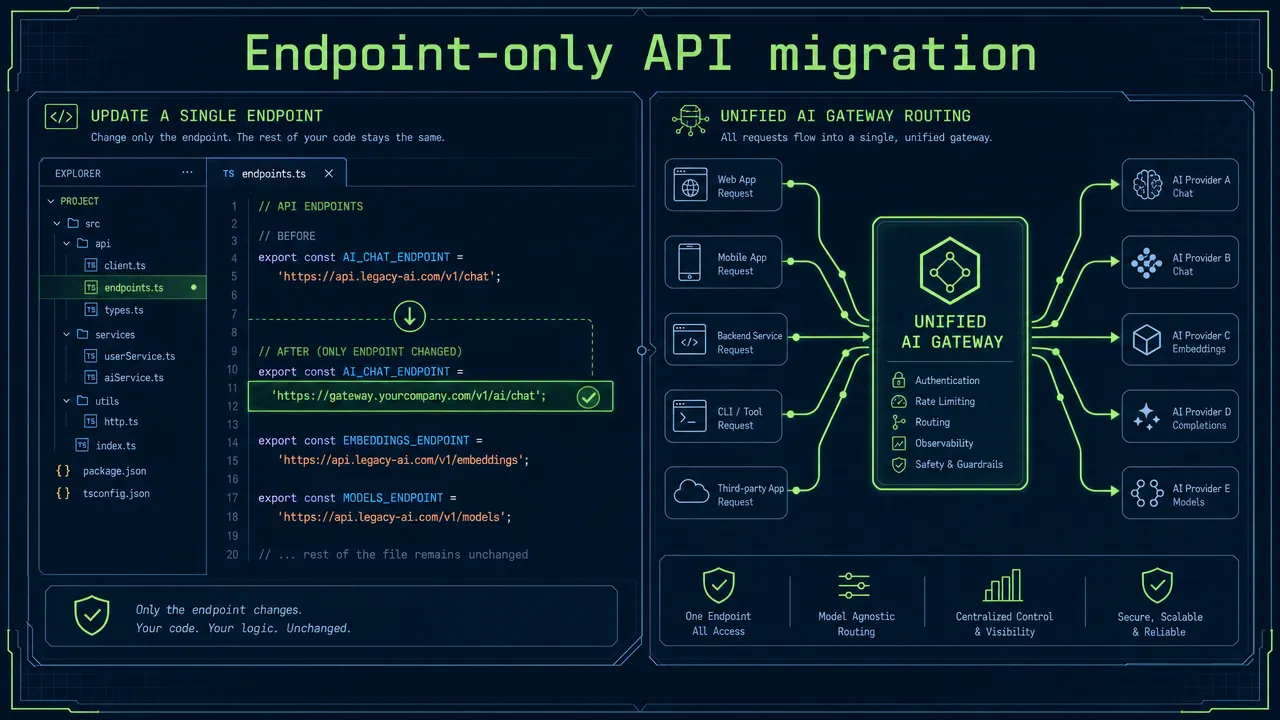
A practical migration checklist:
Step | Action |
|---|---|
1 | Confirm your task can use one of GonkaRouter's currently supported models |
2 | Log in with email |
3 | Get your API key |
4 | Use the one-time 20 USDT trial credit for product testing |
5 | Change only the API endpoint in your existing OpenAI-style or Anthropic-style integration |
6 | Run evaluation prompts for quality, latency, JSON validity, and task success |
7 | Monitor token usage, cache hit rate, fallback rate, and cost per successful task |
The official OpenAI-compatible endpoint guide is the best internal reference for understanding the endpoint-change approach.
Do not use GonkaRouter when you require official OpenAI, Anthropic, Google, or Perplexity models, or when you need a model that is not currently supported. API format compatibility should never be confused with official model availability.
Cheapest llm api FAQ
What is the cheapest llm api in 2026?
The cheapest llm api depends on model fit, output length, retries, cache usage, and integration cost. GonkaRouter states pricing as low as $0.0004 per 1M tokens for its supported models, which is below many public benchmark examples in the research report.
What is the cheapest openai model?
The retrieved OpenAI source listed GPT-5 Nano at $0.05 per 1M input tokens and $0.40 per 1M output tokens. Always verify current pricing in the official OpenAI pricing documentation before publishing or deploying.
What should developers know about vertex ai price?
Vertex AI price can vary by Gemini model, context length, modality, region, batch mode, cached input, and product surface. Check Google Gemini API pricing and Google Cloud pricing pages for current SKUs.
Is perplexity pro api pricing the same as Sonar API pricing?
No. "perplexity pro api pricing" is a common search phrase, but Perplexity Pro is a consumer subscription, while Sonar API pricing is documented separately for API usage.
Is GonkaRouter an OpenAI-compatible API?
Yes, GonkaRouter provides an OpenAI-compatible API format for its supported models. This does not mean GonkaRouter provides official OpenAI models.
Which models does GonkaRouter currently support?
GonkaRouter currently supports MiniMax-M2.7, Kimi-K2.6, and GLM-5.2. It should not be described as supporting any other models unless official product information changes.
How do AI Agents reduce llm costs?
AI Agents reduce llm costs by routing lightweight steps to cheaper models, caching repeated prompts, compressing retrieval context, limiting output tokens, and using fallback only when necessary.