Why Use One API Instead of Integrating Every Model Separately?
Teams evaluating several AI models can quickly accumulate client libraries, credentials, request adapters, retry policies, and billing views. A shared API boundary can reduce that plumbing by giving applications one integration point for the models available through the gateway.
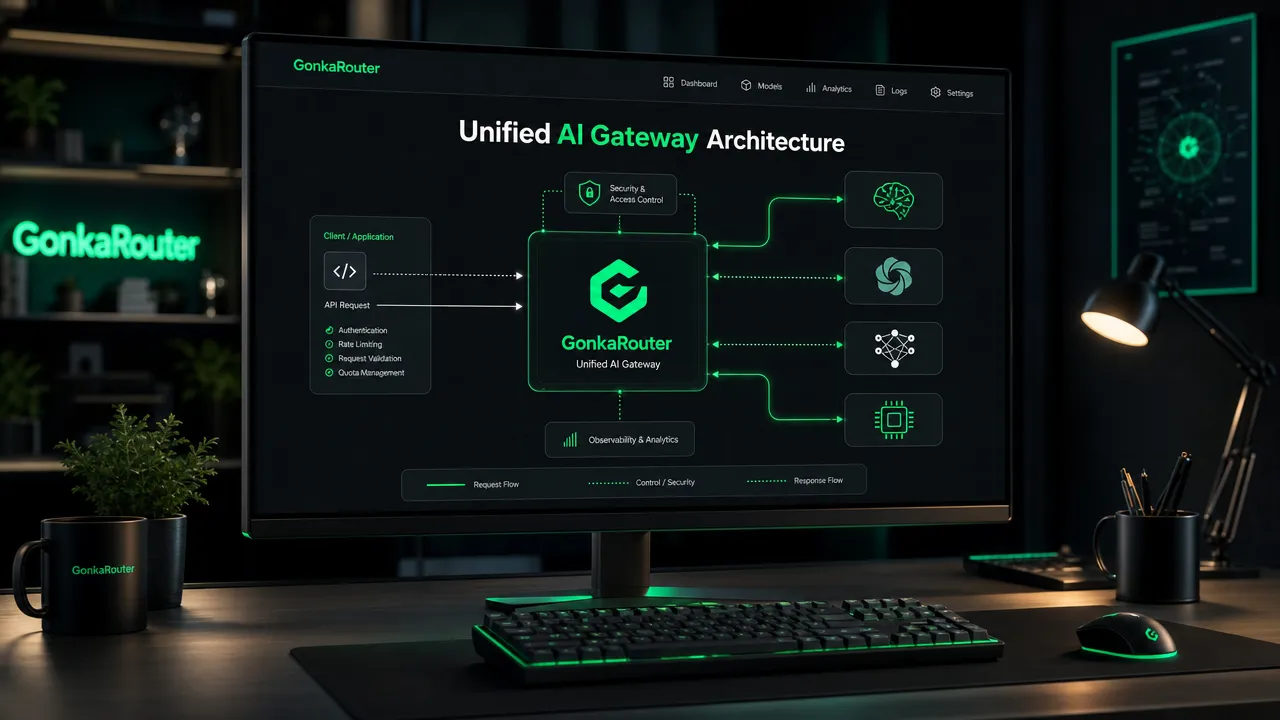
That is an integration benefit, not a promise that every model is available or interchangeable. GonkaRouter accepts OpenAI-compatible and Anthropic-compatible request formats and currently supports GLM-5.3-Flash, DeepSeek-V4-Flash-0731, and MiniMax-M2.7. Compatibility does not mean access to official OpenAI or Anthropic models. Check the live catalog before designing around a model.
What a Shared Boundary Can Simplify
Centralizing client configuration can make it easier to manage API credentials, update endpoint settings, and test a supported model without duplicating transport code across services. It can also make usage review more consistent if the gateway exposes the relevant information; verify current dashboard and API behavior rather than assuming particular telemetry features.
A single endpoint does not standardize model behavior. Context capacity, tool calling, structured output, streaming, safety behavior, and provider-specific parameters can differ. Validate each route against your own prompts and schemas. Keep authorization, output validation, tool permissions, and durable agent state in your application.
Choose the Right Integration Boundary
Direct access is often simplest for a prototype or a service committed to one provider. A gateway becomes more useful when several applications need the same access pattern or when a team wants to compare supported models through one client boundary. Account for the added network hop and the gateway’s availability.
Before migrating production traffic, test representative tasks, record latency and completed-task cost, and define a rollback path. Do not add automatic model fallback unless the alternate route has passed the same safety, quality, and schema tests.
What One API Should and Should Not Abstract
The best abstraction removes repetitive transport code while preserving important model differences. A shared client can normalize authentication, request serialization, streaming event handling, deadlines, and common error categories. It can also expose a consistent place to set the model ID and capture usage metadata. Those are stable infrastructure concerns that otherwise get copied into every service.
Do not force behavioral differences behind a false common denominator. Models may interpret system messages differently, produce different tool-call structures, or support different context and output limits. Some parameters may be ignored, rejected, or implemented with different semantics. Maintain a capability registry alongside the client and validate every request against the selected route. If a workflow requires a specific feature, fail before inference when the chosen model cannot provide it.
This boundary also improves security when it is implemented carefully. Applications can read one server-side secret rather than bundling several vendor keys, and rotation can happen in one configuration layer. That does not justify sharing a production key across unrelated environments or customers. Use the narrowest available permissions, separate environments, redact credentials from logs, and rotate a key immediately if it appears in a repository, browser bundle, screenshot, or support ticket.
Compare Completed Work, Not Individual Calls
One endpoint makes model comparisons easier because the calling code can remain stable, but the evaluation must still reflect production. Assemble examples from the workflows that matter: structured extraction, code assistance, support answers, classification, or agent planning. Define an acceptance check for each example before running it. A response is useful only when it satisfies the schema, factual constraints, tool policy, and business rule expected by the application.
Measure total work required to reach that accepted result. A low-cost call that repeatedly produces invalid JSON can cost more than a higher-priced call that passes on the first attempt. Include retries, repair prompts, tool calls, context replay, and human correction. Track latency at the same time; a route that is economical for an offline batch may not satisfy an interactive product.
Keep model changes reversible. Store the selected model in configuration, deploy to a small traffic segment, and compare it with a stable baseline. Do not silently redirect a request to another model unless that fallback has passed the same tests and the application can tolerate its behavior. For a streamed answer or a side-effecting tool call, restarting on another model can duplicate work or create contradictory state.
Decide When a Gateway Is Worth the Extra Hop
A shared API is most valuable when several services need the same request plumbing, a team regularly evaluates supported models, or security requires central credential handling. It may be unnecessary for a small application with one stable model and no plan to change. Architecture should follow the operating problem, not a preference for more layers.
Account for the gateway as a dependency. Measure end-to-end latency, define service-level objectives at the application boundary, and document how incidents will be diagnosed. Decide whether a direct-access contingency is justified, then test it before production use. A backup path that has never been exercised is not a reliable recovery plan.
Adoption can be incremental. Start with a stateless, low-risk workload, preserve the existing path, and compare outputs under the same conditions. Next, migrate workloads that benefit from shared configuration or model evaluation. Leave high-impact agent actions until authentication, validation, observability, and rollback procedures have been demonstrated. This sequence captures the integration benefit without assuming that one API automatically makes every model interchangeable.
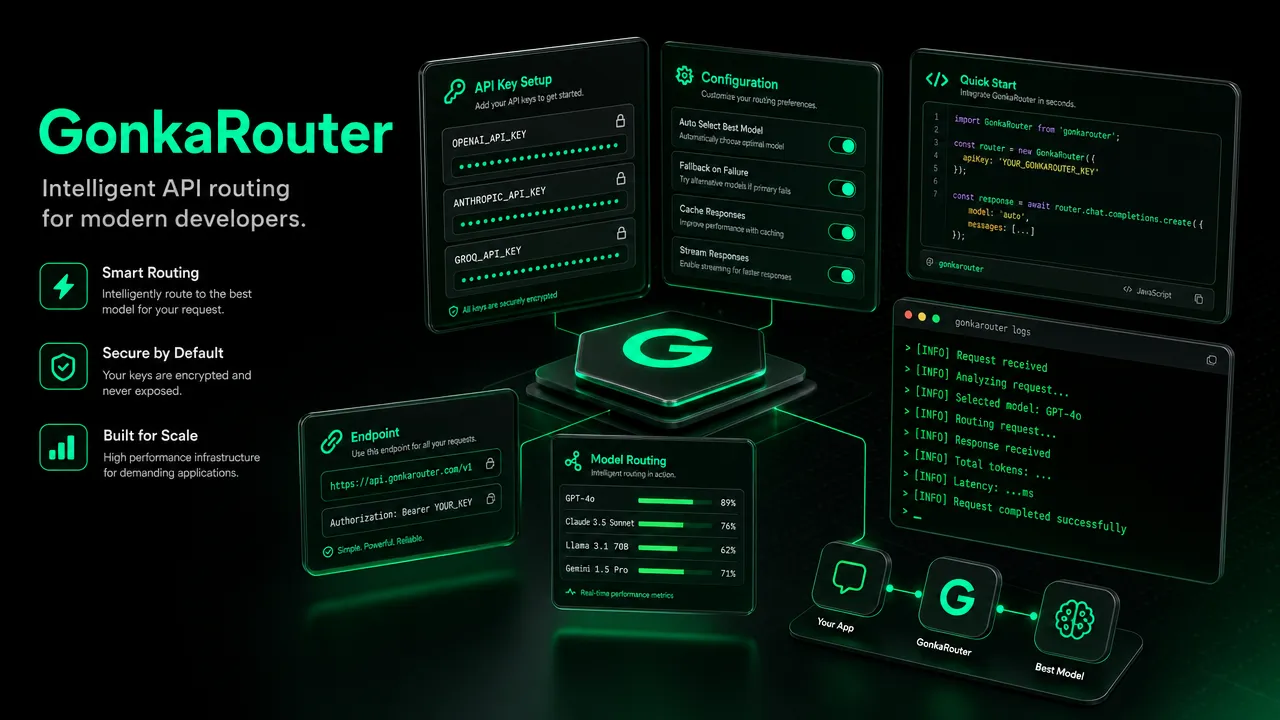
For a practical evaluation, review GonkaRouter’s API overview, confirm the supported model list, and run a small workload through your existing client. Register, create an API key, and compare results before expanding usage.