AntSeed's reported P2P launch shows that AI model routing can separate inference access, provider discovery, and payment settlement, but it also moves operational responsibility away from a single gateway operator and back toward developers, protocols, and providers.
The event matters as an architectural signal rather than as proof of a new production standard. A HackerNoon report originally published on May 15, 2026 said AntSeed launched a peer-to-peer marketplace for AI model access, with direct buyer-provider connections and USDC settlement on Base. The original report and AntSeed documentation describe the product's approach, but they do not independently establish uptime, provider liquidity, model quality, latency, economics, or the degree of decentralization.
That distinction is crucial. A decentralized AI inference API is not automatically a better AI gateway. It is a different allocation of control, risk, and operational work.
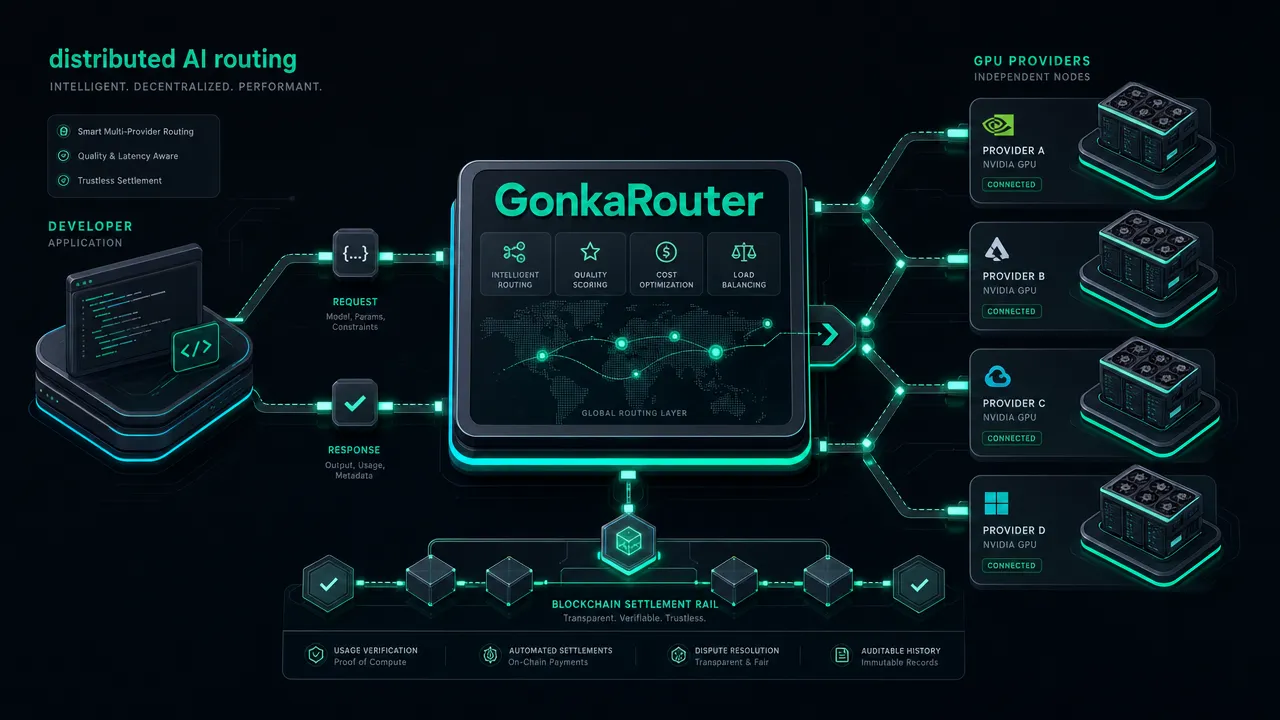
How a decentralized AI inference API redistributes model-routing responsibilities
Conventional model routing centralizes a familiar set of functions: one application endpoint, account credentials, upstream provider connections, billing, route policies, usage records, support, and incident coordination. This operating model reduces integration overhead because the gateway operator owns much of the control plane.
A decentralized AI inference API changes that shape. Rather than relying on one hosted intermediary for every request, a P2P design can distribute compute supply, provider discovery, routing, identity, and settlement across multiple participants. In AntSeed's reported design, a buyer-side proxy discovers a provider, sends requests over a P2P connection, and settles with the provider in USDC.
That model can reduce dependence on a single intermediary. Yet it does not remove the need for control. It relocates it.
Responsibility | Centralized routing pattern | P2P or decentralized routing pattern |
|---|---|---|
Application endpoint | Gateway operator standardizes access | Application or proxy may manage connection behavior |
Provider discovery | Managed by the gateway | Protocol, discovery layer, or application policy |
Provider verification | Gateway can set onboarding requirements | Must be established through protocol rules or external controls |
Billing and settlement | Consolidated account billing | May occur directly between requester and provider |
Reliability handling | Gateway can coordinate fallbacks | Application and routing layer need explicit recovery plans |
Observability | Often consolidated in one platform | May require cross-party logs and application-owned telemetry |
Incident ownership | Clearer escalation path to one operator | Shared among protocol, node operator, and application team |
This is the core Web3 AI API proposition: not simply "AI, but on-chain," but a more modular operating model for access, compute, and settlement.
The terminology needs discipline. Decentralized AI inference refers to distributed inference supply or serving nodes. A decentralized GPU network may provide compute capacity from independent operators. Neither phrase proves that routing, governance, privacy, data retention, or payments are equally decentralized. Likewise, a decentralized LLM access layer may still depend on centralized discovery services, software distribution, identity systems, or application-side policy.
For developers, the practical implication is simple: treat decentralized model routing as an architectural decision, not a marketing attribute.
Why decentralized AI inference API designs create new engineering obligations
A P2P route can make direct provider interaction possible, but direct interaction introduces questions that a centralized ai gateway may normally absorb. Production teams need answers before they move customer traffic to a distributed path.
First is route quality. A model name alone does not establish that a specific provider node is healthy, correctly configured, or appropriate for a workload. Teams need to know how providers are admitted, what evidence supports their availability, how routes are selected, and what happens when a node disappears mid-stream.
Second is data handling. Encrypted transport is important, but it does not answer every privacy question. Teams should map the entire request path: application, proxy, discovery service, provider node, model host, logs, analytics tools, and any payment system. P2P networking does not automatically guarantee end-to-end confidentiality, retention limits, or secure node operation.
Third is failure recovery. A centralized gateway may provide documented fallbacks, usage records, and one support relationship. In a decentralized ai inference design, teams may need their own policies for timeouts, retries, idempotency, output validation, fallback models, and provider exclusions.
A workable implementation starts with explicit controls:
Allowlist approved models and routes by workload and data classification.
Set bounded timeout and retry rules in the application.
Capture route identity, model ID, request ID, error type, latency, and task outcome where available.
Validate structured outputs and function-call arguments before downstream execution.
Keep a tested alternate path for business-critical requests.
Run load and failure tests before expanding production traffic.
The difference between a model router and an ai gateway is helpful here. A router chooses or forwards a model request. A gateway can become a broader application-facing boundary for credentials, policies, usage, and traffic handling. Those capabilities vary by product, so teams should validate them rather than assume a routing label includes automatic fallback, observability, or governance.
For agent workloads, the separation is even more important. A model may propose a function call, but the application must still authorize the tool, validate arguments, and enforce limits. For more implementation context, see secure API-key handling for agent workloads.
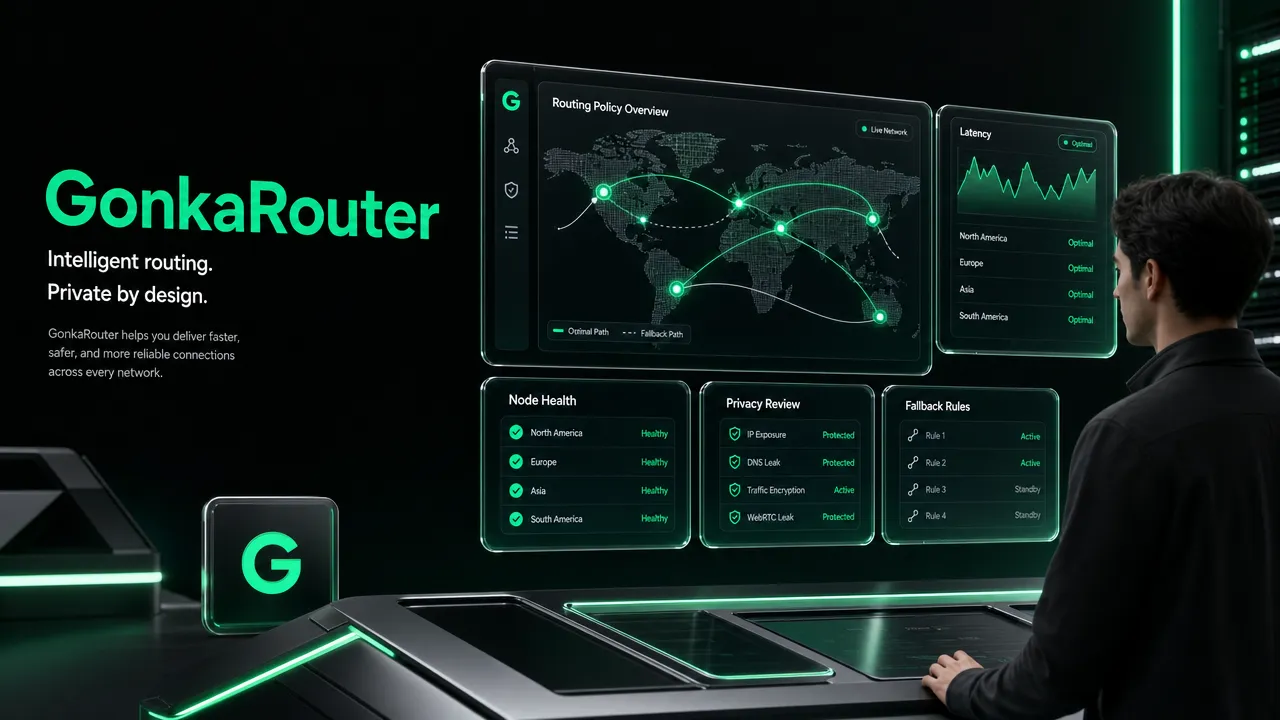
Where decentralized AI inference API payment models help and complicate adoption
AntSeed's reported USDC settlement is relevant as an industry example of crypto AI API payments. It demonstrates how a system could connect an inference request with programmable settlement between a buyer and a provider. That may appeal to globally distributed participants, especially where conventional invoice or card workflows are inefficient.
Still, crypto settlement should be evaluated as payment infrastructure, not as a shortcut around infrastructure discipline.
A crypto AI api model may support granular payment logic, direct provider compensation, and machine-readable settlement policies. The related phrases pay for AI with crypto and crypto payments ai api describe real developer interest in programmable payment rails, but implementation details determine whether the approach fits a specific organization.
Evaluation area | Questions for technical and finance teams |
|---|---|
Wallet custody | Who controls payment wallets, signing permissions, and recovery procedures? |
Settlement timing | Is payment pre-funded, post-request, batched, or conditional on completion? |
Network risk | How are congestion, fees, failed transactions, and finality handled? |
Reconciliation | How will transaction IDs, timestamps, token amounts, and fiat equivalents be recorded? |
Refunds and disputes | Who handles incomplete responses, disputed charges, or provider failures? |
Compliance | What screening, tax, AML/CTF, sanctions, and jurisdictional obligations apply? |
Circle's USDC terms emphasize that use remains subject to applicable legal requirements, including tax, AML/CTF, and sanctions obligations. That is why AI API no KYC should be understood as a search phrase, not a compliance guarantee, legal category, or promise of service availability. No onboarding label overrides applicable rules, provider policy, or regional restrictions.
The same applies to blockchain ai infrastructure more broadly. A blockchain rail may make settlement auditable and programmable, but it introduces dependencies on wallet operations, chain availability, asset policies, and accounting processes. Teams considering a web3 ai gateway should involve security, legal, finance, and procurement stakeholders before treating settlement as an implementation detail.
GonkaRouter is not claimed here to support USDC, crypto payments, or no-KYC onboarding. The AntSeed example illustrates a market direction, not a feature comparison.
How a decentralized AI inference API fits a pragmatic routing strategy
Most teams should not replace a stable integration simply because P2P routing is novel. The better question is which operating model aligns with the workload's requirements for portability, data handling, reliability ownership, payment operations, and support.
A conventional gateway can be appropriate when a team values a single endpoint, consolidated controls, and a clearer support relationship. A decentralized GPU network or P2P marketplace may be worth evaluating when a team has a reason to explore distributed supply, direct provider relationships, or programmable settlement and is prepared to own more of the operational design.
A practical adoption sequence looks like this:
Define route eligibility before requesting inference. Separate public, internal, confidential, and regulated workloads.
Build a small test suite using real prompts, tool schemas, expected outputs, and failure cases.
Measure task completion, not just token price or HTTP success.
Test provider unavailability, stream interruptions, malformed output, and settlement failures.
Establish an exit path, including exported records, key rotation, balance reconciliation, and alternate routing.
Keep the application logic portable through an internal model-client abstraction.
This approach applies equally to web3 ai infrastructure and conventional multi-provider systems. Developers need a stable boundary between their product logic and changing inference options. For a useful comparison of those responsibilities, see inference layer versus AI gateway and multi-provider routing in enterprise infrastructure.
The AntSeed event is therefore best read as evidence that AI access can be decomposed. Discovery, inference, routing, and settlement do not have to be owned by the same company. Whether they should be separated for a given workload depends on the team's ability to verify and operate the resulting system.
How GonkaRouter positions a decentralized AI inference API conversation for developers
GonkaRouter is an AI Model Router built for the Gonka Network. Its site lists an OpenAI-compatible API endpoint, along with DeepSeek-V4-Flash, MiniMax-M2.7, and Kimi-K2.6 as featured models. It also displays Function Calling, Private VPC Deployment, and Web3 Ecosystem Integration.
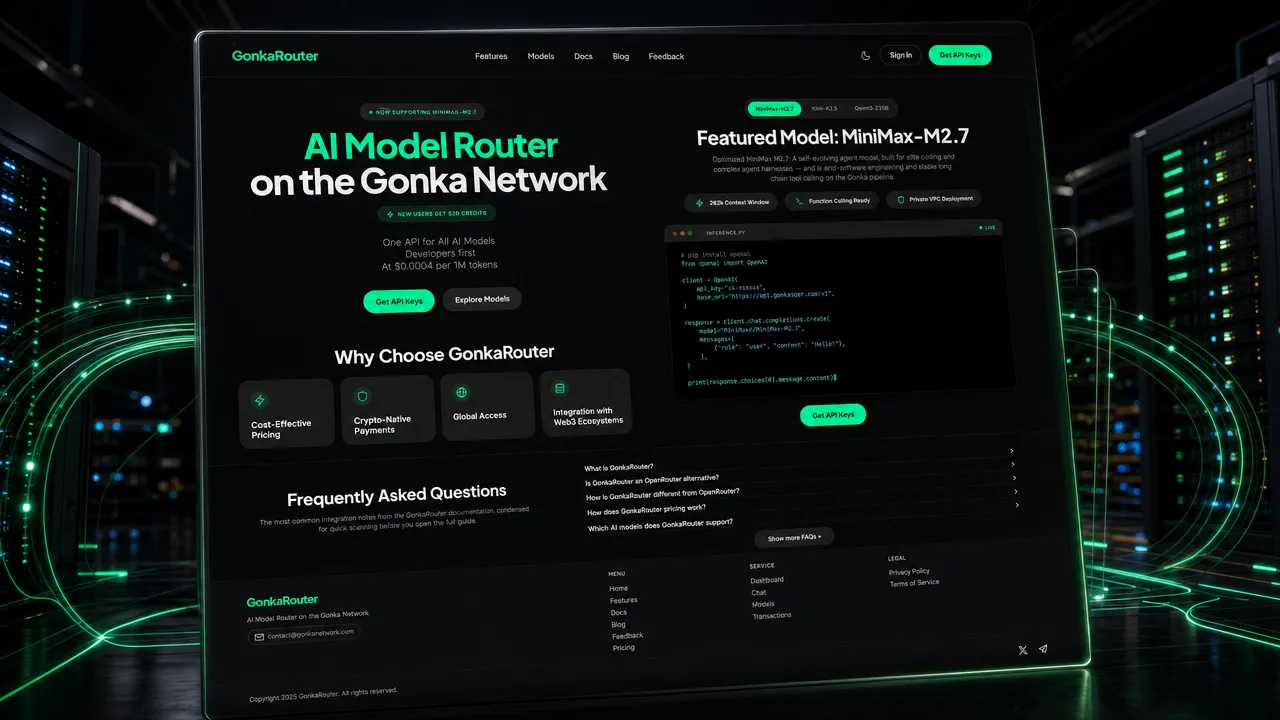
Those facts make GonkaRouter relevant to developers evaluating model-router architecture without requiring unsupported claims about payment rails, automatic routing behavior, reliability, or compliance. OpenAI compatibility can reduce integration effort for applications already built around OpenAI-style request patterns, but teams should still test the exact endpoints, streaming behavior, parameters, errors, and function-call flows their workloads require.
Function Calling is particularly relevant for tool-using applications, where the application must retain control over authorization and execution. Private VPC Deployment is relevant to teams assessing network boundaries. Web3 Ecosystem Integration provides a contextual connection for teams building blockchain-oriented applications.
The measured takeaway is not that all AI routing will become P2P. It is that infrastructure teams now have more choices about where routing, compute, payment, and control live. A decentralized AI inference API can expand those choices, but it also demands clearer route policies, stronger observability, verified provider controls, and disciplined fallback planning.