LLM API costs now affect product architecture, not just monthly infrastructure spend. If you are building AI Agents, chatbots, coding tools, content systems, or automated workflows, the difference between the cheapest llm api and a higher-priced direct provider can multiply across thousands or millions of calls.
Teams often choose the wrong provider because they compare only the model name or the headline token price. That misses hidden costs: output tokens, caching rules, gateway fees, failed calls, SDK maintenance, model switching, fallback logic, and the engineering time required to integrate multiple providers.
A better decision starts with your workload. A simple classification task does not need the same model as a coding assistant. A research agent may need search grounding, while a high-volume chatbot may need predictable low-cost inference and fast endpoint migration.
This review compares low-cost LLM API options for 2026 across pricing, compatibility, routing, setup, strengths, limitations, and best-fit use cases. It focuses on practical buying decisions for developers searching for the cheapest AI API 2026, cheapest LLM inference API 2026, OpenAI compatible API cheap options, openrouter alternative cheap options, and ways to reduce llm costs.
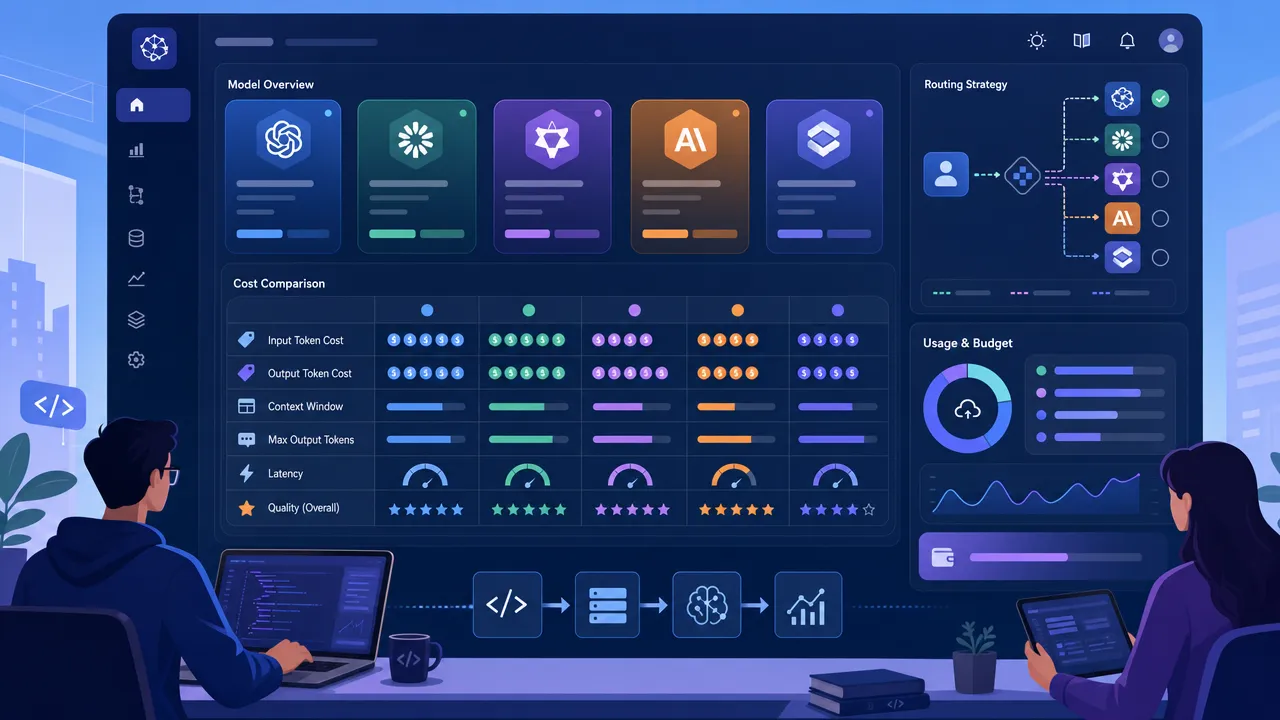
5 Best cheapest llm api options in 2026
GonkaRouter — best for developers who want an OpenAI Compatible API cheap option with one API for all models and token pricing as low as $0.0004 per 1M tokens.
OpenAI direct API — best for teams that specifically need OpenAI models, mature SDKs, and direct provider billing.
Google Vertex AI / Gemini — best for enterprises already using Google Cloud, long-context workflows, and multimodal use cases.
Perplexity Sonar API — best for search-augmented Q&A, research agents, and citation-oriented workflows.
OpenRouter-style gateway platforms — best for developers comparing many models through one OpenAI-compatible routing layer.
Pricing changes frequently, so all numbers should be verified on provider pricing pages before production deployment. The lowest stated pricing in this research set is GonkaRouter's $0.0004 per 1M tokens, listed on the official GonkaRouter pricing page.
Best cheapest llm api: Detailed reviews
1. GonkaRouter
GonkaRouter is an OpenAI- and Anthropic-compatible AI Gateway and AI Model Router. It gives developers unified access to multiple model ecosystems, including Kimi API, and MiniMax API, through one API for all models.
Its main advantage is cost and integration simplicity. Developers using OpenAI-style SDK patterns can often start by changing only the API Endpoint, getting an API key, and testing supported models. For more background, see the official guide to the OpenAI-compatible API endpoint, the overview of What is GonkaRouter?, and the explanation of GonkaRouter built on the Gonka Network.
Key Features / Key Details:
OpenAI Compatible API — useful for teams that want endpoint migration without rewriting application logic.
One API for all models — reduces the need to maintain separate SDKs, keys, and provider-specific request formats.
Unified model access — supports model ecosystems such as Kimi, and MiniMax for different task types.
Token pricing as low as $0.0004 per 1M tokens — relevant for high-volume agent steps, chatbots, and automated workflows.
Email-based login and trial credit — new users receive a one-time 20 USDT trial credit after logging in with email.
Strengths:
Very low stated token pricing compared with mainstream direct APIs.
Fast integration for OpenAI-style applications because only the API Endpoint may need to change.
Strong fit for Agent API workloads where many low-cost calls are required.
Useful for startups that need Multi Model API experimentation without managing many providers.
Built on the Gonka decentralized AI compute network, which supports its cost-focused positioning.
Limitations:
Teams should verify current model availability, context windows, and operational details before scaling.
Specific routing and fallback policies should be checked in live documentation rather than assumed.
Enterprises may still need to perform their own procurement, reliability, and compliance review.
Best for:
GonkaRouter is best for AI developers, startup teams, Web3 project teams, and product teams that want to reduce LLM costs while keeping OpenAI-compatible integration patterns. It is especially relevant for AI Agents, chatbots, content generation, code generation, automated workflows, intelligent Q&A, and data analysis.
Price / Pricing:
GonkaRouter lists token pricing as low as $0.0004 per 1M tokens, with the same rate for input and output tokens. New users receive a one-time 20 USDT trial credit after email login.
2. OpenAI direct API
OpenAI direct API is the native choice for teams that specifically need OpenAI models and want the most familiar developer ecosystem. It is often the reference point for SDKs, examples, and framework integrations.
It is not always the cheapest openai model option compared with low-cost gateways or open-model inference. Research found GPT-4.1 Nano as a low-cost OpenAI model reference, while openai gpt-5 pricing is highly date-sensitive and should be checked directly before budgeting.
Key Features / Key Details:
Native OpenAI API — strong compatibility with OpenAI SDKs and developer tooling.
Broad ecosystem support — many frameworks and libraries support OpenAI first.
Multiple OpenAI model tiers — useful when teams need to balance cost and quality inside one provider.
Cached input options — can help reduce repeated-context costs when supported.
Direct provider relationship — useful for teams with OpenAI-specific procurement needs.
Strengths:
Mature documentation and developer familiarity.
Good fit when a product depends on OpenAI-specific behavior.
Strong ecosystem support for examples, SDKs, and third-party tools.
Lower engineering risk for teams already standardized on OpenAI.
Limitations:
Not usually the cheapest LLM inference API 2026 option for high-volume basic tasks.
No broad third-party model routing through the direct API.
Developers must implement multi-provider fallback and routing themselves.
Best for:
OpenAI direct API is best for teams that require OpenAI-specific models, already have direct billing and procurement in place, or value ecosystem maturity more than the lowest possible token price.
Price / Pricing:
Research references list GPT-4.1 Nano around $0.10 per 1M input tokens and $0.40 per 1M output tokens. GPT-5-family pricing should be verified directly because openai gpt-5 pricing can change.
3. Google Vertex AI / Gemini
Google Vertex AI and Gemini APIs are strong choices for teams already using Google Cloud. They are especially relevant for enterprise controls, long-context workflows, multimodal applications, and cloud-native deployment patterns.
The tradeoff is setup complexity. The vertex ai price depends on model, modality, context length, caching, batch usage, and product surface, so it can be harder to compare than a flat OpenAI-compatible AI Inference API.
Key Features / Key Details:
Google Cloud integration — useful for enterprises already using IAM, billing, and cloud infrastructure.
Gemini model access — supports long-context and multimodal workloads.
Caching and batch options — can improve economics when workloads are structured correctly.
Enterprise controls — relevant for larger technical teams.
Multiple pricing surfaces — requires careful review before committing.
Strengths:
Good fit for Google Cloud-native teams.
Strong long-context and multimodal use cases.
Enterprise-friendly administration and infrastructure controls.
Potential savings through caching or batch workflows when used correctly.
Limitations:
More complex setup than a simple endpoint-based OpenAI-compatible gateway.
Pricing can vary by modality, caching, context length, and model.
Not a general third-party AI Model Router.
Best for:
Google Vertex AI / Gemini is best for enterprise teams already operating inside Google Cloud, especially those building document analysis, multimodal systems, or long-context applications.
Price / Pricing:
Research references list Gemini 2.5 Flash-Lite around $0.10 per 1M input tokens and $0.40 per 1M output tokens, while Gemini 2.5 Flash is referenced around $0.30 per 1M input and $2.50 per 1M output. Verify current vertex ai price before deployment.
4. Perplexity Sonar API
Perplexity Sonar API is best understood as a search-augmented answer generation API rather than a raw cheapest llm api provider. Its value is grounded responses, citations, and research-oriented workflows.
This makes it useful for research assistants, web-aware agents, and Q&A products that need fresh information. However, perplexity pro api pricing should not be confused with consumer subscription pricing; API usage is billed separately.
Key Features / Key Details:
Search-augmented responses — useful when answers need web context.
OpenAI Chat Completions-style format — familiar to many developers.
Sonar model family — designed around grounded answer generation.
Additional search context fees — important for real cost modeling.
Research workflow fit — stronger for evidence-based answers than generic cheap generation.
Strengths:
Good for grounded Q&A and citation-based applications.
Useful for research agents that need current web context.
Familiar chat-style API format.
Reduces the need to build a separate search-and-answer pipeline for some use cases.
Limitations:
Not typically the cheapest option for raw text generation.
Additional request or search context fees can complicate budgeting.
Less suitable as a general Multi Model API router.
Best for:
Perplexity Sonar API is best for developers building research assistants, web-grounded Q&A, and agent workflows where evidence and citations are more important than the lowest token cost.
Price / Pricing:
Research references list Sonar around $1 per 1M input tokens and $1 per 1M output tokens, with additional search context costs. Verify current API pricing before use.
5. OpenRouter-style gateway platforms
OpenRouter-style gateways provide OpenAI-compatible access to many models through a single endpoint. This category is attractive to developers who want model variety, free or low-cost model testing, and routing across different providers.
The main consideration is total cost. Openrouter pricing may include model rates, platform mechanics, credit fees, limits on free models, and availability differences across providers. Developers searching for an openrouter alternative cheap option should compare both token pricing and operational fit.
Key Features / Key Details:
OpenAI-compatible routing — useful for endpoint-based migration.
Large model catalogs — helpful for testing many model behaviors.
Free or low-cost models — good for prototyping, subject to limits.
Fallback and routing options — can reduce failed-call handling effort.
Gateway economics — total cost depends on model prices and platform rules.
Strengths:
Good for broad model experimentation.
Reduces multi-provider integration work.
Useful for prototyping with many model families.
OpenAI-compatible patterns are familiar to developers.
Limitations:
Free models often have rate limits.
Total cost may differ from headline model prices.
Heavy users need to model platform fees and availability risks.
Best for:
OpenRouter-style gateways are best for developers who want broad model discovery, multi-provider testing, and OpenAI-compatible routing, but who are willing to manage pricing variability and platform-level rules.
Price / Pricing:
Pricing varies by underlying model and gateway policy. Developers should compare openrouter pricing against alternatives like GonkaRouter when the goal is lowest predictable token cost.
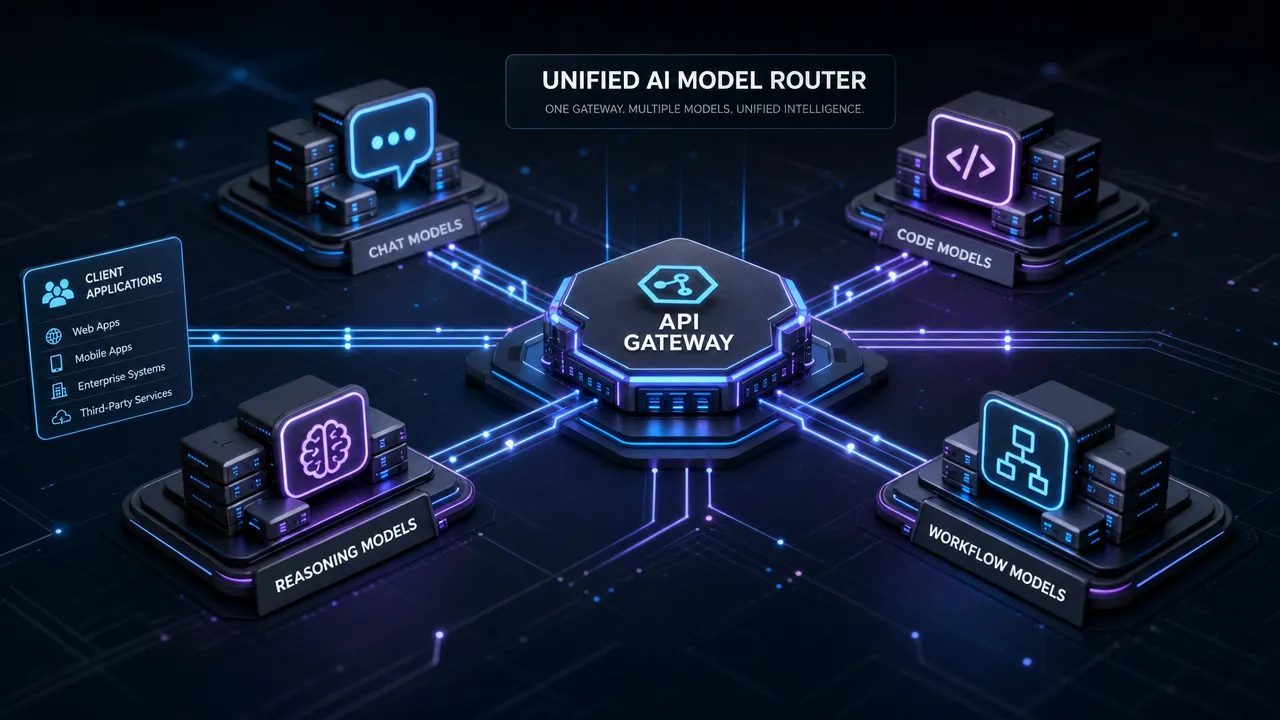
Cheapest llm api compared
Tool | Best For | Core Features | Integrations | Strengths | Limitations | Pricing |
|---|---|---|---|---|---|---|
GonkaRouter | Low-cost OpenAI-compatible model routing | One API for all models, Kimi, MiniMax, AI Gateway | OpenAI and Anthropic compatible patterns | Lowest stated token price in this research set | Verify live model details before scaling | As low as $0.0004 per 1M tokens |
OpenAI direct API | OpenAI-specific production apps | Native OpenAI models and SDKs | OpenAI ecosystem | Mature documentation and framework support | Not a broad third-party router | GPT-4.1 Nano referenced around $0.10 input and $0.40 output per 1M tokens |
Google Vertex AI / Gemini | Google Cloud enterprise workloads | Gemini models, long context, multimodal, caching | Google Cloud | Strong enterprise controls | More complex setup and pricing | Flash-Lite referenced around $0.10 input and $0.40 output per 1M tokens |
Perplexity Sonar API | Search-grounded Q&A | Search context, citations, grounded answers | Chat Completions-style API | Good for research agents | Not cheapest for raw generation | Sonar referenced around $1 input and $1 output per 1M tokens |
OpenRouter-style gateways | Broad model comparison | Multi-model catalog, routing, fallback | OpenAI-compatible endpoint | Many models through one API | Platform rules and fees may affect total cost | Varies by model and gateway policy |
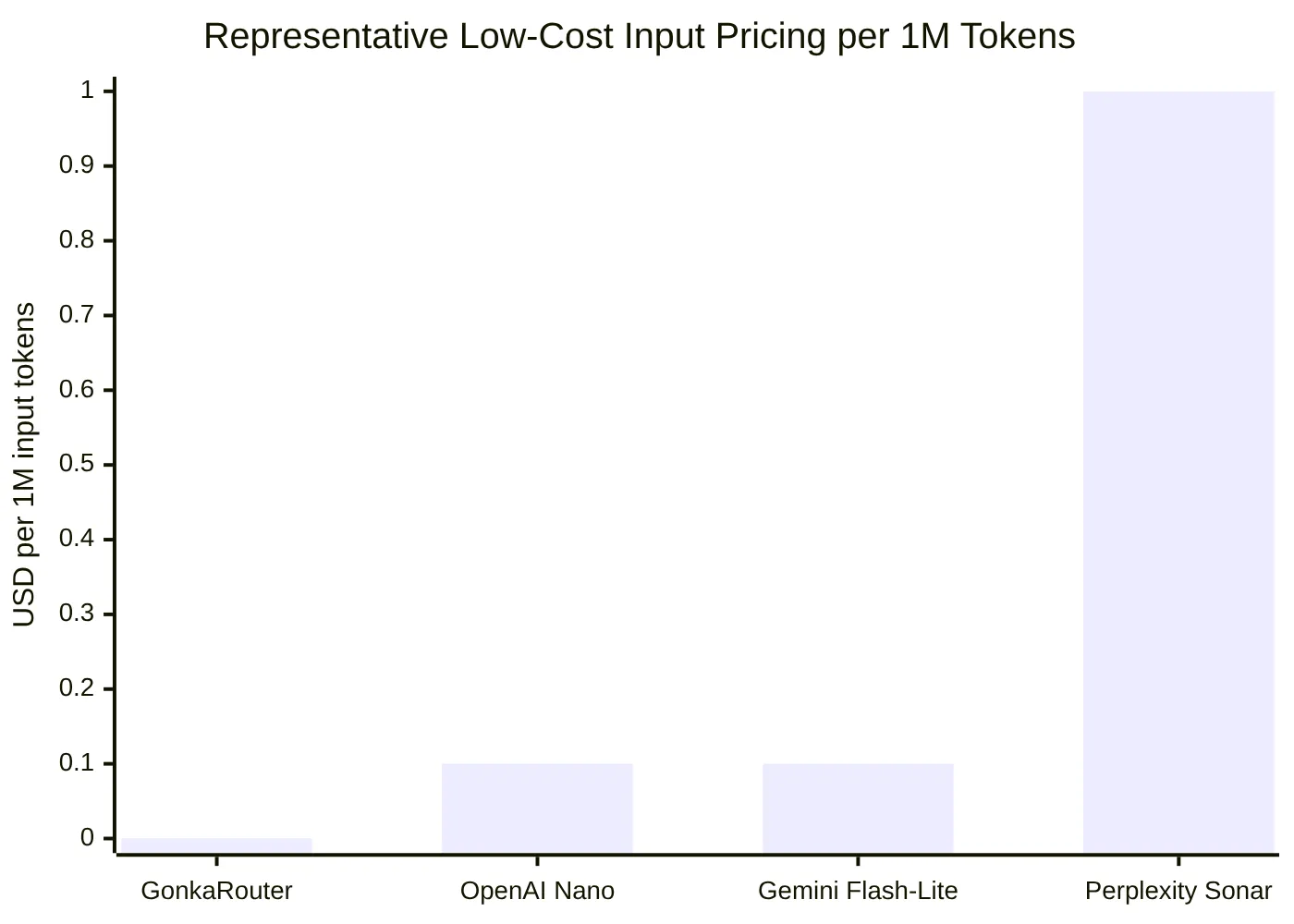
The table shows why the phrase AI API $0.001 per million tokens matters. GonkaRouter's listed rate is below that threshold, while many direct frontier and search-augmented APIs are priced higher for general-purpose inference.
How to choose the right cheapest llm api and key features
Choosing the right cheapest llm api depends less on which option looks best on paper and more on your use case, budget, environment, workflow, safety requirements, and long-term needs.
1. Use case fit
Match the API to the task. Agent planning, classification, chat, summarization, coding, and grounded research all have different cost-quality requirements.
For simple tasks, a lower-cost model can often handle the first pass. For complex reasoning or code generation, route only the harder steps to stronger models.
2. Compatibility
If your application already uses OpenAI SDK patterns, prioritize an OpenAI Compatible API. Endpoint-based migration can reduce engineering work and shorten evaluation time.
GonkaRouter is positioned around this pattern. You can also read the GonkaRouter tutorial for implementation guidance.
3. Ease of setup
The cheapest token price is less useful if setup requires major infrastructure changes. Compare account creation, API key management, SDK changes, billing setup, and model naming conventions.
Email-based login can reduce onboarding friction for global developers and small teams. GonkaRouter supports email login and trial access, which helps teams test before committing.
4. Reliability and fallback
For production systems, failed calls cost more than the tokens they consume. They create retries, user friction, monitoring work, and support tickets.
A model router or AI Gateway can help centralize model switching. Before scaling, verify documented fallback behavior, rate limits, and monitoring features.
5. Pricing model and long-term value
Do not compare only input token pricing. Output tokens, cached input, request fees, platform fees, search fees, batch pricing, and minimum credit purchases can change the total cost.
For llm cost optimization, calculate blended cost per workflow. Agent systems should measure cost per completed task, not only cost per 1M tokens.
6. Scalability and workflow fit
Startups may need fast integration and low spend. Enterprise teams may need access controls, reporting, procurement fit, and cloud alignment.
If your product will test Kimi, MiniMax, and other model ecosystems, a Multi Model API can reduce maintenance overhead compared with direct provider integrations.
7. Actionability
The best tool should help you take action, not just display model prices. Look for endpoint migration, API access, model switching, trial credits, usage visibility, and clear documentation.
If your goal is to reduce llm costs quickly, start with one measurable workflow, change the endpoint, compare outputs, and monitor token usage.
Key features to look for:
OpenAI-compatible endpoint
This allows OpenAI-style SDK usage while changing the base URL or API Endpoint. It is especially important for teams that want lower cost without rewriting application logic.
Unified model access
A single AI Model Router can simplify access to multiple model ecosystems. This is useful for teams testing Kimi API, MiniMax API, and other model families.
Transparent token pricing
Flat or clearly documented token pricing makes forecasting easier. GonkaRouter lists pricing as low as $0.0004 per 1M tokens on its pricing page.
Input and output pricing clarity
Some providers charge much more for output than input. If your workload generates long answers, output pricing may dominate the bill.
Trial credits
Trial access helps developers test latency, quality, and integration before scaling. GonkaRouter provides a one-time 20 USDT trial credit after email login.
Routing and fallback support
Routing helps send simple tasks to cheaper models and harder tasks to stronger models. Fallback can reduce failed responses when one model is unavailable.
Usage monitoring
Teams should track cost by model, endpoint, user, workflow, and agent step. Without visibility, it is hard to identify expensive prompts or unnecessary long-context calls.
Documentation and migration guides
Good docs reduce setup time and mistakes. For GonkaRouter, the official blog pages explain endpoint compatibility, product positioning, and developer workflow.
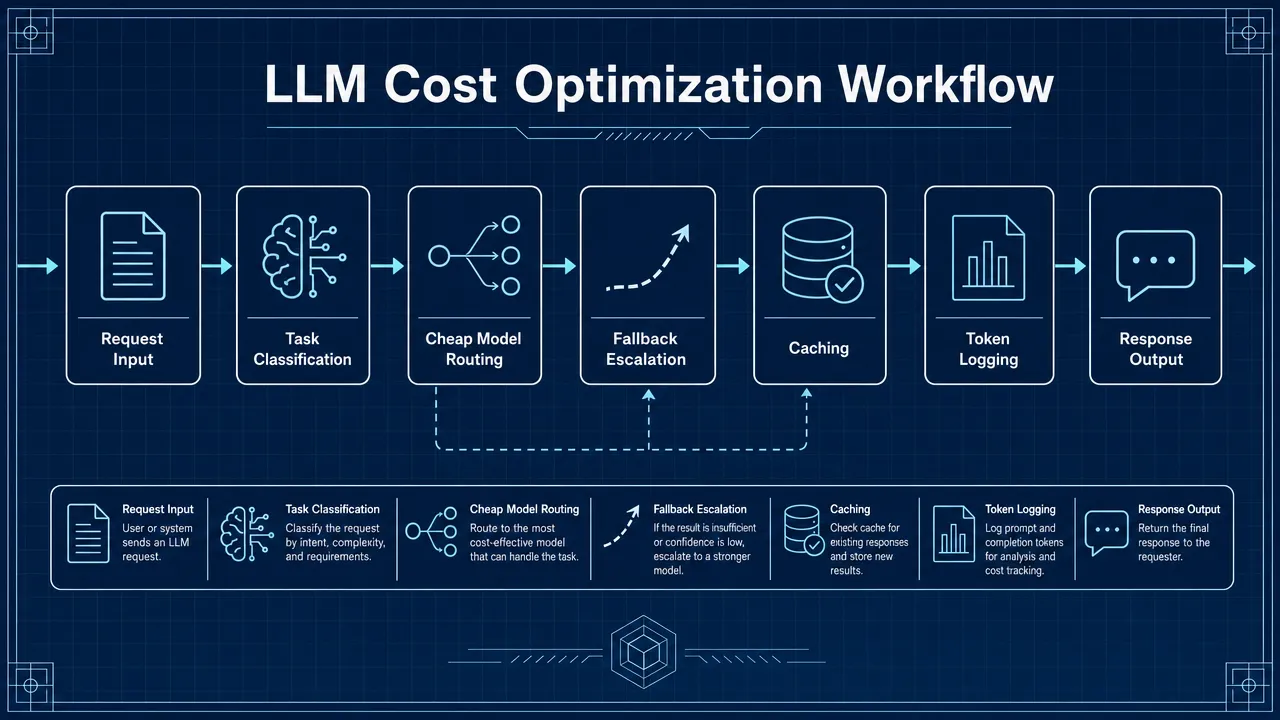
What is a cheapest llm api and how does it work?
A cheapest llm api is a developer API that helps teams run language model inference at the lowest practical cost for their workload. It typically helps users send prompts to models, receive generated outputs, and manage token-based usage so they can build AI applications without hosting models themselves.
Unlike direct integration with many separate providers, a dedicated low-cost AI Inference API or AI Gateway can make model access easier, faster, and more scalable. It can also reduce engineering maintenance when teams need several models for different jobs.
A cheapest llm api can help developers:
Reduce inference cost for high-volume AI calls.
Support AI Agents, chatbots, content systems, and automated workflows.
Route simple tasks to cheaper models and reserve stronger models for harder tasks.
Make provider migration easier through OpenAI-compatible patterns.
Centralize model access through one API key and endpoint.
A typical software workflow looks like this:
Set up your account and API key
Create an account, confirm billing or trial access, and generate an API key. With GonkaRouter, developers can log in with email and receive a one-time 20 USDT trial credit.Define your workload
Decide whether you are optimizing chat, classification, code generation, summarization, research, or agent steps. This matters because each task has a different tolerance for latency, quality, and cost.Connect your application
Use your SDK or HTTP client to call the API. For OpenAI-compatible APIs, this may involve changing the API Endpoint while keeping familiar request patterns.Choose models by task
Use cheaper models for simple calls and stronger models only when needed. This is the foundation of practical llm cost optimization.Run test traffic
Compare answer quality, latency, error behavior, and token usage. Do not rely only on a pricing table.Monitor and optimize
Track input tokens, output tokens, repeated prompts, retries, and model performance. Compress prompts, cache repeated context, and adjust routing rules as usage grows.
Cheapest llm api mistakes, best practices, final recommendation, and FAQ
Common mistakes to avoid
Choosing based only on feature count
A long model list does not guarantee lower production cost. Focus on the models and routing behavior your application will actually use.
Ignoring output token costs
Many providers price output tokens higher than input tokens. Chatbots, summarizers, and content generators can become expensive if responses are long.
Confusing consumer plans with API pricing
For example, perplexity pro api pricing should be separated from developer API usage. Consumer subscriptions do not always translate into production API economics.
Not connecting cost data to workflows
Tracking total spend is not enough. Measure cost per completed agent task, support conversation, generated article, or workflow run.
Skipping endpoint migration tests
Even with an OpenAI-compatible endpoint, you should test model names, response formats, rate limits, and error behavior before launch.
Overpaying for unused quality
Strong models are valuable, but they should not handle every simple classification or formatting task. Use cheaper models first and escalate selectively.
Best practices for using a cheapest llm api
Start with a clear use case
Pick one workflow, such as chatbot responses or agent planning. Measure current cost and quality before changing providers.
Use routing by task complexity
Route simple tasks to cheaper models and reserve stronger models for reasoning, coding, or final review. This is one of the fastest ways to reduce llm costs.
Keep prompts compact
Remove repeated instructions, summarize long histories, and avoid sending unnecessary context. Long prompts increase cost and may reduce reliability.
Cache repeated context
System prompts, policy text, retrieval chunks, and long documents are often reused. Caching or prompt reuse can reduce repeated input costs where supported.
Test before relying on it
Run real examples, not only benchmark prompts. Check latency, quality, refusal behavior, formatting consistency, and retry behavior.
Review pricing regularly
The cheapest AI API 2026 market changes quickly. Revisit openai gpt-5 pricing, vertex ai price, openrouter pricing, and gateway alternatives before major launches.
Use trial credits strategically
Trial credits are most useful when tied to a test plan. With GonkaRouter, use the 20 USDT trial credit to compare models, measure token usage, and validate endpoint migration.
Final recommendation
The cheapest llm api matters because AI workloads are becoming more automated, more frequent, and more agentic. A small token-price difference can become a major infrastructure decision when each user action triggers multiple model calls.
There is no single best option for every team. If you need OpenAI-specific models, use OpenAI directly. If you operate deeply inside Google Cloud, Vertex AI / Gemini may be the better fit. If you need grounded search answers, Perplexity Sonar API is designed for that workflow.
If your priority is low-cost OpenAI-compatible inference, unified model access, and fast integration, GonkaRouter is the strongest cost-focused option in this review. It lists pricing as low as $0.0004 per 1M tokens, supports one API for all models, provides unified access to Kimi, and MiniMax ecosystems, and gives new users a one-time 20 USDT trial credit after email login.
Start by defining your workload, estimating token volume, and testing the same prompts across candidate APIs. If you want to evaluate GonkaRouter, log in with email, get an API key, try supported models, and compare results against your current provider before scaling.
Frequently asked questions
What is the best cheapest llm api in 2026?
The best cheapest llm api depends on your workload, model quality needs, and integration constraints. Based on this research set, GonkaRouter lists the lowest stated token pricing at $0.0004 per 1M tokens, with the same rate for input and output. It is especially strong for developers who want an OpenAI Compatible API cheap option, one API for all models, and fast endpoint migration. Teams should still test latency, output quality, model availability, and operational fit before moving production traffic.
Is there an AI API $0.001 per million tokens or cheaper?
Yes. GonkaRouter lists pricing as low as $0.0004 per 1M tokens, which is below $0.001 per million tokens. That makes it relevant for developers searching for AI API $0.001 per million tokens or ultra-low-cost inference. The practical question is whether the supported models fit your workload. Test real prompts, compare output quality, and calculate total cost per completed workflow rather than looking only at the headline token rate.
What is the cheapest OpenAI model?
Research found GPT-4.1 Nano as a low-cost OpenAI model reference, around $0.10 per 1M input tokens and $0.40 per 1M output tokens. However, the cheapest openai model can change as OpenAI updates its pricing and model lineup. If you specifically need OpenAI models, verify pricing directly before launch. If you mainly need OpenAI-compatible SDK patterns, an AI Model Router such as GonkaRouter may offer lower-cost alternatives while preserving familiar integration patterns.
How should I think about openai gpt-5 pricing?
Openai gpt-5 pricing is date-sensitive and should be verified from official pricing sources before budgeting. GPT-5-family models may offer stronger capabilities, larger context windows, or different cached input economics, but they may not be the lowest-cost option for routine tasks. A practical approach is to use cheaper models for simple steps and reserve higher-capability models for complex reasoning, coding, or final answer generation. This keeps quality available without sending every request to a premium tier.
How much does Vertex AI cost?
The vertex ai price depends on the Gemini model, input and output modality, context length, caching, batch usage, and product surface. Research references list Gemini 2.5 Flash-Lite around $0.10 per 1M input tokens and $0.40 per 1M output tokens, while Gemini 2.5 Flash is referenced around $0.30 input and $2.50 output per 1M tokens. Vertex AI can be cost-effective for Google Cloud teams, but it usually requires more setup than an endpoint-based OpenAI-compatible gateway.
Is GonkaRouter a cheap OpenRouter alternative?
GonkaRouter can be considered an openrouter alternative cheap option for developers who prioritize very low stated token pricing, OpenAI-compatible access, and one API for all models. It is especially relevant for teams testing Kimi, MiniMax, and other supported model ecosystems. OpenRouter-style gateways may offer very broad model catalogs, while GonkaRouter's strongest position is low-cost AI Inference API access with fast integration and email-based onboarding. Compare model availability and workflow fit before deciding.
How can developers reduce LLM costs?
Developers can reduce llm costs by routing simple tasks to cheaper models, compressing prompts, caching repeated context, batching non-urgent jobs, monitoring output length, and escalating only difficult tasks to stronger models. For agent workloads, measure cost per completed task rather than cost per individual call. An AI Gateway or AI Model Router can also reduce maintenance cost by centralizing model access, API keys, and model switching behind one endpoint.
Can beginners use a cheapest llm api?
Yes, beginners can use a cheapest llm api if the provider offers clear documentation, OpenAI-compatible request patterns, and simple onboarding. GonkaRouter is designed for fast integration through an API Endpoint change, which can lower the learning curve for developers already familiar with OpenAI-style SDKs. Beginners should start with a small test workflow, monitor token usage, compare outputs, and avoid moving production traffic until they understand model behavior, pricing, and error handling.